German Chancellor Merz Calls 2008 Decision on Ukraine’s NATO Accession a 'Mistake'
German Chancellor Friedrich Merz stated that failing to accept Ukraine into NATO during the 2008 Bucharest summit was a strategic error that paved the way for Russia's invasion. Meanwhile, NATO officials are assessing additional deployments to reinforce the eastern flank.
 🌍World
Photo: Euronews
Key points
- Friedrich Merz stated that refusing Ukraine's NATO entry in 2008 was a strategic mistake that enabled Russia's invasion.
- NATO Secretary General Mark Rutte rejected Kremlin demands to roll back alliance borders to 1997 positions.
- The alliance is considering deploying additional defense assets to Poland following recent airspace incursions.
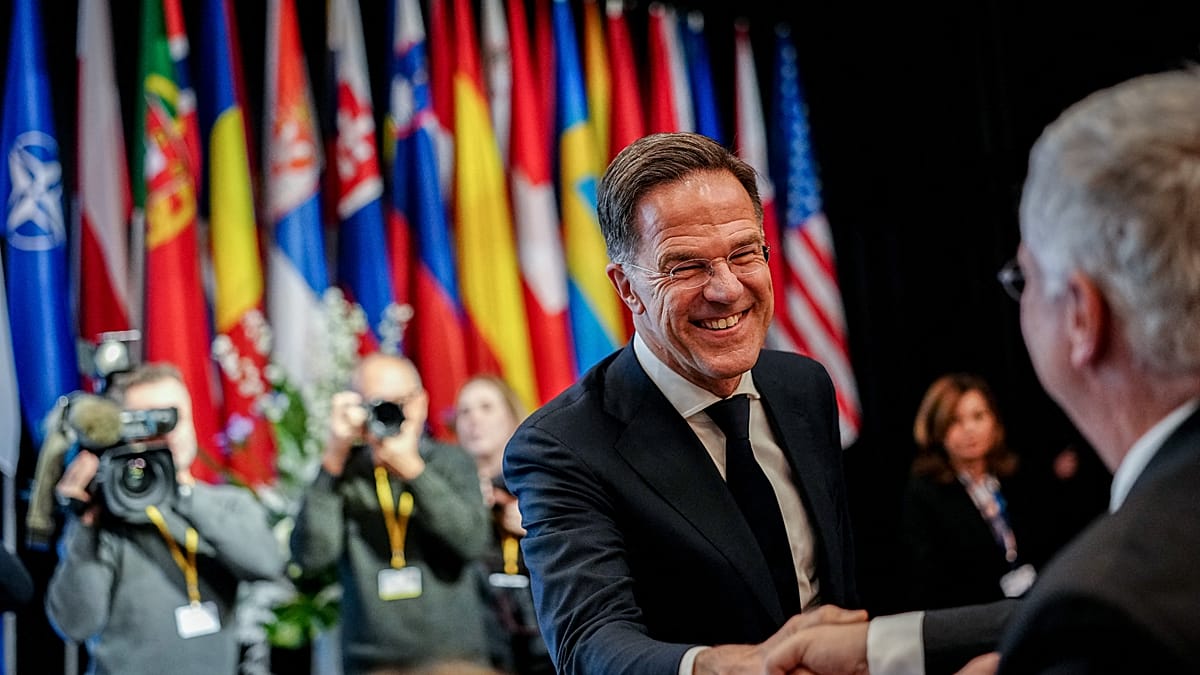
German Chancellor Friedrich Merz has publicly criticized the decision made at the 2008 Bucharest NATO summit to block Ukraine’s path toward alliance membership. Speaking at a joint news conference in Berlin alongside NATO Secretary General Mark Rutte, Merz characterized the refusal to follow the initial proposal by then-US President George W. Bush as a major mistake. He argued that granting Ukraine full membership back then would likely have deterred Russia from launching its full-scale invasion.
The high-level meeting coincided with the NATO Parliamentary Assembly’s annual gathering, taking place against the backdrop of US-led diplomatic efforts to end the conflict. Merz’s statements build upon recent calls by French President Emmanuel Macron to reopen the debate regarding Kyiv's accession into the defense bloc. However, NATO Secretary General Mark Rutte adopted a more reserved posture, emphasizing that successful peace negotiations must precede any formal expansion discussions.
Allied Unity and Rejection of Moscow’s Demands
Addressing Russian President Vladimir Putin's reported demands that NATO reverse its post-1997 expansion to secure a peace deal, Rutte firmly rejected any potential concessions regarding alliance composition. He reiterated that NATO's 32 member states hold exclusive authority over membership decisions. Rutte emphasized that rolling back the alliance's borders to late-20th-century lines is off the table, maintaining that Moscow cannot exert a veto over NATO's future configuration.
The conference also touched upon Russia’s escalating battlefield casualties and hybrid warfare tactics across Europe, including a recent incident in Poland where two cruise missiles and a drone crossed into Polish airspace. Rutte highlighted that Russian forces are suffering up to 50,000 casualties per month while Ukrainian forces strike targets deep within Russian territory. Ukrainian President Volodymyr Zelenskyy linked these strikes to recent diplomatic engagements involving US President Donald Trump and Chinese President Xi Jinping.
Strengthening NATO's Eastern Flank
In response to the growing frequency of hybrid threats and territorial violations, NATO ambassadors convened in Brussels to evaluate military readiness along the eastern perimeter. Alliance officials confirmed that the Supreme Allied Commander Europe is reviewing the potential deployment of additional assets to Poland and adjacent areas to reinforce deterrence mechanisms.
Rutte underscored that the most effective response to Russian provocation is intensifying direct support for Kyiv. He advocated for a structured increase in military aid following every security incident in Europe, signaling that allied deterrence relies on sustained defensive backing for Ukrainian forces.
Source Euronews — euronews.com/2026/11/23/merz-says-it-was-a-mistake-not-to-admit-ukr… ↗
Read next
 🚀Space
Ukraine braces for another difficult winter amid ongoing attacks on energy infrastructure
Ukrainians are preparing for a harsh winter as continuous strikes on energy facilities and rising food prices strain households.
 🛡️Cyber
Russia’s hybrid war on Europe is evolving but failing to deter Ukraine support, IISS report says
A report by the IISS highlights an increase in Russian sabotage and infrastructure attacks across Europe, noting however that the strategy has failed to weaken support fo…
 🔬Science
Biomolecular analysis reveals centuries-old embalming recipes for Egyptian crocodile mummies
A study of ancient Egyptian crocodile mummies shows that embalmers used the exact same beeswax and pine resin recipe centuries apart at a single site.
 💻Tech
Astronomers Witness Rare Stellar Merger as Red Giant Devours Companion Star
An international team of researchers used advanced ground- and space-based telescopes to document a rare cosmic event where a massive red giant swallowed its smaller stel…
 🛡️Cyber
Cybersecurity Weekly Roundup: Ransomware Fraud, ChatGPT Sites Leaks, and New Defenses
The latest threat intelligence roundup covers charges against a recovery firm co-founder, web app exposure risks, software patches, and VirusTotal's new detection feature…
 🔬Science
Bacterial colonies turn themselves inside out when oxygen is scarce
An international research team discovered that Neisseria gonorrhoeae bacteria respond to oxygen depletion in the colony's center by reducing cell adhesion, triggering a p…