South China Sea code of conduct talks stall amid deep disputes
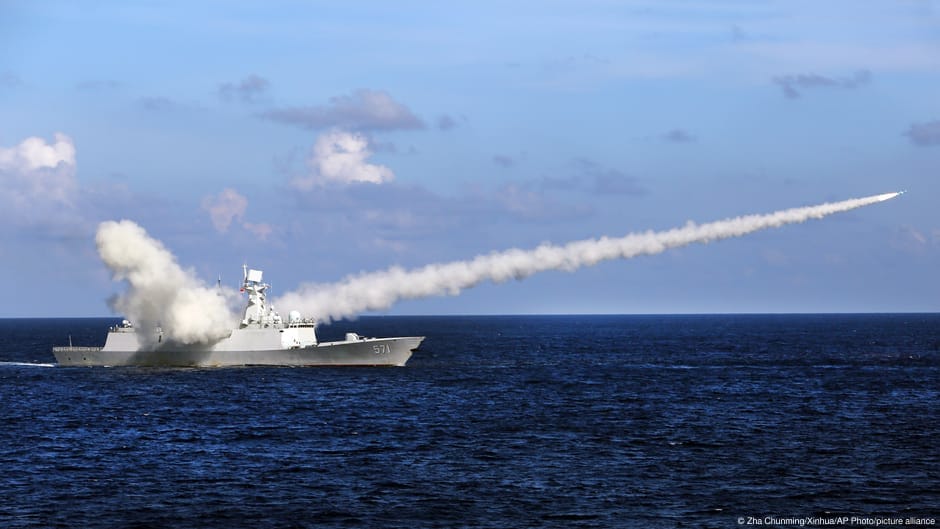
The Philippines had to abandon its goal of establishing a South China Sea code of conduct with China during its ASEAN presidency due to unresolved core disputes.
 🌍World
Photo: DW (EN)
Key points
- Philippines dropped the goal to finalize the code during its ASEAN presidency.
- China avoids legally binding constraints to preserve its strategic freedom.
- ASEAN internal disunity and consensus rules block unified responses.
Efforts to establish a framework for stability in the South China Sea faced a major setback after Manila was forced to drop its target of finalizing a code of conduct with China. During the summit in Manila, officials noted that while roughly 80% of the text had been negotiated, key dispute areas remained deadlocked. The region serves as one of the world's primary shipping lanes, rich in fisheries and potential energy resources, making it a critical hub for international commerce.
Core obstacles and Beijing's strategic approach
Political analysts point out that the fundamental hurdle is China's reluctance to enter into a legally binding agreement. Beijing claims vast areas of the sea under its Nine-Dash Line, overlapping with the territorial claims of Vietnam, the Philippines, Malaysia, and Brunei. Experts argue that Beijing maintains little incentive to restrict its own maneuvers through binding international law as long as it can successfully pursue its regional objectives without formal constraints.
Furthermore, negotiators remain deeply divided over the geographic scope of the agreement and the definition of a maritime "incident." Disagreements persist over whether coast guard operations involving water cannons and supply vessel blockades should be regulated, or if the code should apply strictly to military engagements. Without clear definitions, any treaty risks remaining a toothless political declaration.
Internal divisions within ASEAN further complicate the diplomatic process. While the Philippines and Vietnam actively challenge Beijing's assertive posture, nations like Cambodia and Laos maintain close economic ties with China and hold no competing maritime claims. Because ASEAN operates on a consensus principle, individual member states can easily veto unified positions, paralyzing collective action in the face of recurrent maritime confrontations.
Source DW (EN) — dw.com/en/china-asean-countries-struggle-over-south-china-sea-code-… ↗
Read next
 📈Business
Trump Administration Pressures Intel and Nvidia, Sparking Concerns Over State Control
Newly unsealed court documents reveal aggressive government pressure on Intel and Nvidia, shifting tech policy toward direct state stakes.
 🚀Space
Ukraine braces for another difficult winter amid ongoing attacks on energy infrastructure
Ukrainians are preparing for a harsh winter as continuous strikes on energy facilities and rising food prices strain households.
 🛡️Cyber
Russia’s hybrid war on Europe is evolving but failing to deter Ukraine support, IISS report says
A report by the IISS highlights an increase in Russian sabotage and infrastructure attacks across Europe, noting however that the strategy has failed to weaken support fo…
 🔬Science
Biomolecular analysis reveals centuries-old embalming recipes for Egyptian crocodile mummies
A study of ancient Egyptian crocodile mummies shows that embalmers used the exact same beeswax and pine resin recipe centuries apart at a single site.
 🛡️Cyber
Cybersecurity Weekly Roundup: Ransomware Fraud, ChatGPT Sites Leaks, and New Defenses
The latest threat intelligence roundup covers charges against a recovery firm co-founder, web app exposure risks, software patches, and VirusTotal's new detection feature…
 💻Tech
Astronomers Witness Rare Stellar Merger as Red Giant Devours Companion Star
An international team of researchers used advanced ground- and space-based telescopes to document a rare cosmic event where a massive red giant swallowed its smaller stel…