Fighting Disinformation in Africa: Media Literacy Push Faces Risks of State Censorship
As fake news and AI-driven manipulations expand across Africa, civil society and governments are launching media literacy efforts. However, analysts warn that some regimes are weaponizing anti-disinformation measures to curb free speech and suppress political dissent.
 🌍World
Photo: DW (EN)
Key points
- Expert Dani Madrid-Morales identifies three types of disinformation: financial scams, foreign operations, and domestic political campaigns
- Military juntas in Mali and Burkina Faso use anti-fake news narratives to target press freedom
- Afrobarometer study reveals over 60% positive sentiment toward Chinese influence and 52% toward the US
The rapid spread of manipulated digital content and artificial intelligence tools is posing unprecedented challenges to democratic stability and election integrity across the African continent. In response, regional civil society groups and international partners are working to enhance public media literacy, though systemic hurdles remain prominent.
State Regulation versus Freedom of Speech
According to Dani Madrid-Morales, a journalism lecturer at the University of Sheffield, disinformation in the region spans financial scams, foreign influence operations, and domestic political campaigns. In nations such as Mali and Burkina Faso, military rulers have cited false information as a rationale to shut down independent news outlets and expel international correspondents.
Human rights groups raise similar concerns in Nigeria, where the UNESCO-backed International Media and Information Literacy Institute (IMILI) operates amid fears of expanding state control. Likewise, in Kenya, anti-fake-news legislation is increasingly scrutinized for its potential misuse against anti-government voices.
Grassroots Efforts and Geopolitical Dynamics
Despite these barriers, grassroots initiatives continue to foster critical thinking. South Africa's Africa Check runs educational programs in schools, while Ghana's Penplusbytes has engaged over 3,000 rural residents through its "Caravan of Hope" project. Meanwhile, data from Afrobarometer highlights broader geopolitical shifts, showing over 60% positive perception for China's influence and 52% for the United States, compared to 34% for France in French-speaking nations.
Source DW (EN) — dw.com/en/fake-news-in-africa-in-an-age-of-disinformation-who-decid… ↗
Read next
 📈Business
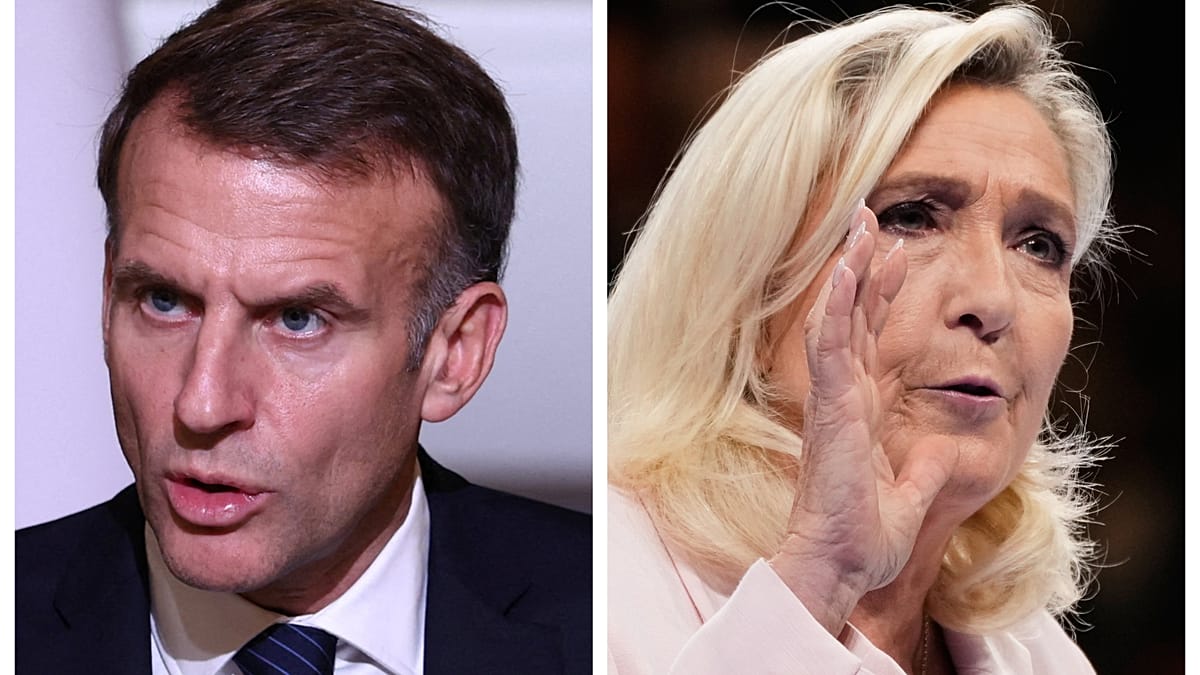
EU Budget Row: Macron Accuses Le Pen of Arrogance Amid Multiannual Funding Clash
Discussions over the European Union's next multiannual budget have sparked a fierce political showdown between French President Emmanuel Macron and far-right leader Marin…
 📈Business
Trump Administration Pressures Intel and Nvidia, Sparking Concerns Over State Control
Newly unsealed court documents reveal aggressive government pressure on Intel and Nvidia, shifting tech policy toward direct state stakes.
 🚀Space
Ukraine braces for another difficult winter amid ongoing attacks on energy infrastructure
Ukrainians are preparing for a harsh winter as continuous strikes on energy facilities and rising food prices strain households.
 🛡️Cyber
Russia’s hybrid war on Europe is evolving but failing to deter Ukraine support, IISS report says
A report by the IISS highlights an increase in Russian sabotage and infrastructure attacks across Europe, noting however that the strategy has failed to weaken support fo…
 🔬Science
Biomolecular analysis reveals centuries-old embalming recipes for Egyptian crocodile mummies
A study of ancient Egyptian crocodile mummies shows that embalmers used the exact same beeswax and pine resin recipe centuries apart at a single site.
 🛡️Cyber
Cybersecurity Weekly Roundup: Ransomware Fraud, ChatGPT Sites Leaks, and New Defenses
The latest threat intelligence roundup covers charges against a recovery firm co-founder, web app exposure risks, software patches, and VirusTotal's new detection feature…