Moscow Signals Readiness for EU Participation in Ukraine Peace Talks
The Kremlin has indicated it will not oppose European Union representation in future negotiations, marking a departure from its previous efforts to exclude Brussels from the process.
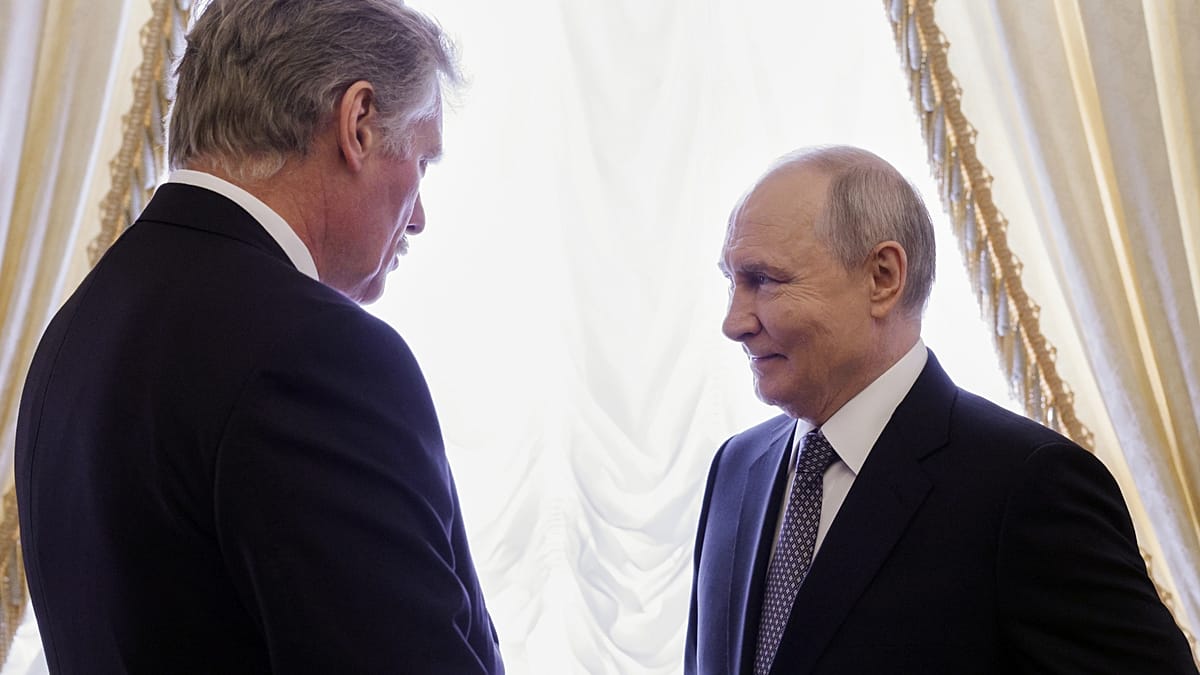 🌍World
Photo: Euronews
Key points
- Russia will not set conditions for the European negotiating team's membership.
- The shift follows trilateral meetings in Abu Dhabi and mediation by Jared Kushner.
- The EU delegation will include representatives from Germany, France, Italy, Poland, and the UK.
Diplomatic Shift: Moscow Accepts EU Role in Peace Talks
The Kremlin has indicated a significant shift in its diplomatic stance, signaling that it will no longer oppose the presence of European Union representatives in negotiations concerning the conflict in Ukraine. Dmitry Peskov, the Russian presidential spokesperson, stated that Moscow does not intend to influence the composition of the EU’s delegation at the bargaining table.
This development follows a series of high-level meetings in Abu Dhabi involving officials from the United States, Ukraine, and Russia. While European diplomats were notably absent from those initial trilateral discussions, recent updates from US envoy Jared Kushner suggested that Russia has now consented to expanding the format to include European stakeholders in the next phase of talks.
Peskov clarified that it would be "completely wrong" for Moscow to dictate who should represent the European side. He noted that the primary objective for Russia is to engage with the delegation to understand how their specific positions might contribute to a potential peace settlement. This tone is a departure from earlier Russian assertions that the EU had no role to play in the mediation process.
European leaders have already moved to organize their representation for the upcoming sessions. Following a summit on Friday, it was decided that the EU would be represented by a collective group including the bloc's central institutions and delegates from key member states: Germany, France, Italy, Poland, and the United Kingdom.
The inclusion of European powers marks a tactical change in the negotiation structure, which had previously been dominated by the direct dialogue between Washington, Kyiv, and Moscow. Analysts suggest this could be an attempt to address the security architecture of the continent more broadly as the conflict continues.
Source Euronews — euronews.com/2026/11/14/moscow-says-it-will-not-dictate-eu-delegati… ↗
Read next
 📈Business
Trump Administration Pressures Intel and Nvidia, Sparking Concerns Over State Control
Newly unsealed court documents reveal aggressive government pressure on Intel and Nvidia, shifting tech policy toward direct state stakes.
 🚀Space
Ukraine braces for another difficult winter amid ongoing attacks on energy infrastructure
Ukrainians are preparing for a harsh winter as continuous strikes on energy facilities and rising food prices strain households.
 🛡️Cyber
Russia’s hybrid war on Europe is evolving but failing to deter Ukraine support, IISS report says
A report by the IISS highlights an increase in Russian sabotage and infrastructure attacks across Europe, noting however that the strategy has failed to weaken support fo…
 🔬Science
Biomolecular analysis reveals centuries-old embalming recipes for Egyptian crocodile mummies
A study of ancient Egyptian crocodile mummies shows that embalmers used the exact same beeswax and pine resin recipe centuries apart at a single site.
 🛡️Cyber
Cybersecurity Weekly Roundup: Ransomware Fraud, ChatGPT Sites Leaks, and New Defenses
The latest threat intelligence roundup covers charges against a recovery firm co-founder, web app exposure risks, software patches, and VirusTotal's new detection feature…
 💻Tech
Astronomers Witness Rare Stellar Merger as Red Giant Devours Companion Star
An international team of researchers used advanced ground- and space-based telescopes to document a rare cosmic event where a massive red giant swallowed its smaller stel…