Laptop eGPUs vs Onboard Graphics: Bandwidth Bottlenecks and Performance Limits
An examination of performance limits, bandwidth bottlenecks, and economic factors surrounding external desktop graphics cards for laptops.
 💻Tech
Photo: Engadget
Key points
- eGPUs connect via Thunderbolt or USB4, creating a bandwidth bottleneck compared to internal PCIe.
- High-end desktop graphics cards cannot always operate at peak capacity through external cables.
- Enclosure costs, power supplies, and GPU prices make eGPU setups expensive unless using spare parts.
Connecting a high-end desktop graphics card to a portable computer has long appealed to users seeking a balance between mobility and heavy-duty performance. However, external GPU (eGPU) enclosures introduce structural hurdles, primarily because all graphics data must travel through external cables rather than direct internal architecture.
Unlike laptop-bound dedicated GPUs that rely on direct internal PCIe connections, external units must communicate via Thunderbolt or USB4. Even advanced standards like Thunderbolt 5 enforce strict throughput caps on PCIe data. Consequently, massive desktop hardware—such as NVIDIA's desktop RTX 5090 with its immense memory bandwidth and high power draws—faces a significant bottleneck before the signal even reaches the laptop.
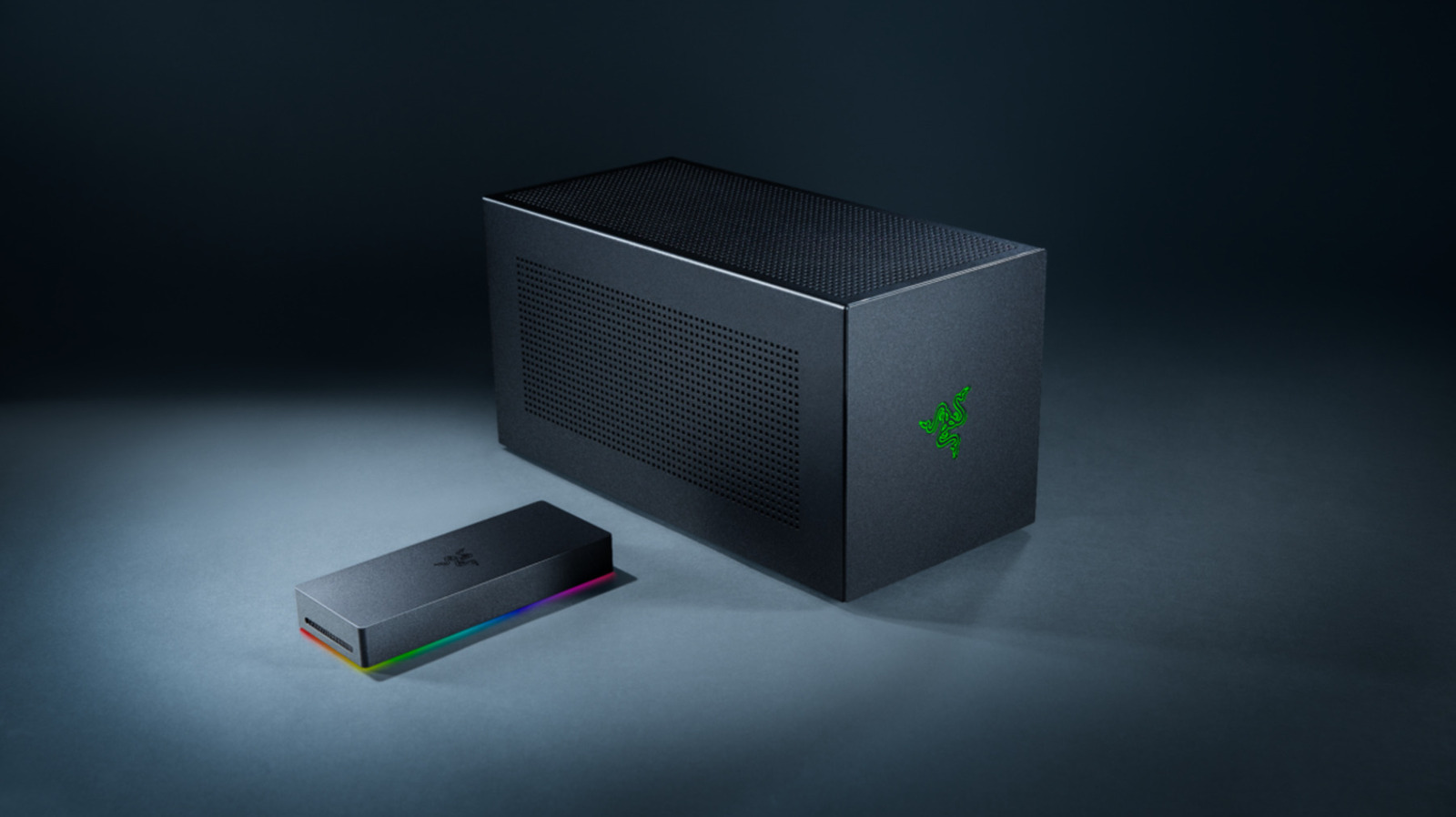
Performance can take an additional hit if users rely on the laptop's built-in display, as rendered frames must travel back through the restricted connection. Furthermore, building an eGPU setup involves substantial expenses. Specialized enclosures like the Razer Thunderbolt 5 Core X V2 cost around $350 and typically require purchasing a separate desktop GPU and ATX power supply, making the investment difficult to justify unless utilizing spare hardware.
Source Engadget — engadget.com/2313636/limitations-egpu-vs-onboard-graphics-card-lapt… ↗
Read next
 📈Business
Trump Administration Pressures Intel and Nvidia, Sparking Concerns Over State Control
Newly unsealed court documents reveal aggressive government pressure on Intel and Nvidia, shifting tech policy toward direct state stakes.
 🚀Space
Ukraine braces for another difficult winter amid ongoing attacks on energy infrastructure
Ukrainians are preparing for a harsh winter as continuous strikes on energy facilities and rising food prices strain households.
 🛡️Cyber
Russia’s hybrid war on Europe is evolving but failing to deter Ukraine support, IISS report says
A report by the IISS highlights an increase in Russian sabotage and infrastructure attacks across Europe, noting however that the strategy has failed to weaken support fo…
 🔬Science
Biomolecular analysis reveals centuries-old embalming recipes for Egyptian crocodile mummies
A study of ancient Egyptian crocodile mummies shows that embalmers used the exact same beeswax and pine resin recipe centuries apart at a single site.
 🛡️Cyber
Cybersecurity Weekly Roundup: Ransomware Fraud, ChatGPT Sites Leaks, and New Defenses
The latest threat intelligence roundup covers charges against a recovery firm co-founder, web app exposure risks, software patches, and VirusTotal's new detection feature…
 🌍World
NATO Fighter Jets Scrambled After Drone Enters Latvian Airspace
Latvian armed forces deployed Alliance aircraft and interceptors following a brief border breach by an unidentified unmanned aerial vehicle.