SpaceX explains Starship Flight 15 booster catch abort due to guidance issue
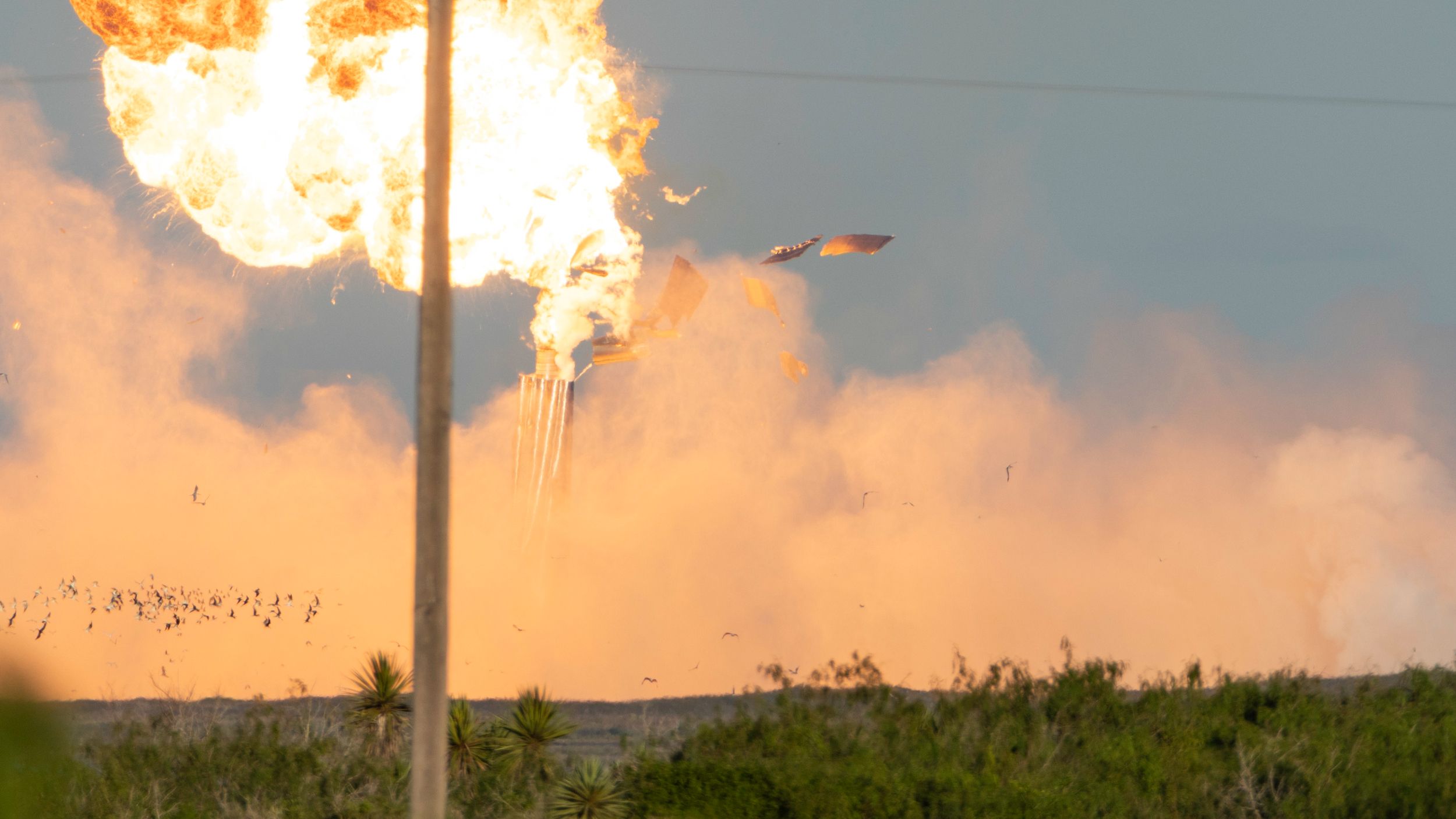
During the Starship Flight 15 test launch, SpaceX was forced to abort the first-stage Super Heavy booster catch by the mechanical tower arms due to a guidance and navigation issue.
 💻Tech
Photo: Space.com
Key points
- Super Heavy booster missed its tower catch due to a GNC guidance issue.
- The flight termination system destroyed the stage over the Gulf of Mexico.
- The upper-stage Starship continued its scheduled orbital mission.
SpaceX has identified the cause behind the aborted landing attempt of its Super Heavy booster during Friday's ambitious Flight 15 test mission. The planned return of the first-stage booster to the launch tower, where it was meant to be caught mid-air by the mechanical 'chopstick' arms, was called off at the last moment due to a technical anomaly.
According to SpaceX spokesperson Dan Huot during live mission commentary, the onboard systems detected a guidance, navigation, and control (GNC) issue during the later stages of the coast phase. This anomaly triggered an automatic contingency abort, diverting the massive rocket away from the Texas launch site toward a designated offshore zone.
During the descent, the booster successfully ignited 13 Raptor engines to slow itself down for the tower approach before the maneuver was cut short. Huot noted that after the flight termination system (FTS) was triggered, the Super Heavy stage broke apart and splashed down into the Gulf of Mexico roughly six and a half minutes after liftoff.
Despite the booster loss, the upper-stage Starship vehicle remained healthy and continued its orbital trajectory. SpaceX engineering teams are actively reviewing telemetry data from the flight to enhance the reliability and precision of future recovery attempts for the world's largest launch system.
Source Space.com — space.com/space-exploration/launches-spacecraft/spacex-says-starshi… ↗
Read next
 📈Business
Trump Administration Pressures Intel and Nvidia, Sparking Concerns Over State Control
Newly unsealed court documents reveal aggressive government pressure on Intel and Nvidia, shifting tech policy toward direct state stakes.
 🚀Space
Ukraine braces for another difficult winter amid ongoing attacks on energy infrastructure
Ukrainians are preparing for a harsh winter as continuous strikes on energy facilities and rising food prices strain households.
 🛡️Cyber
Russia’s hybrid war on Europe is evolving but failing to deter Ukraine support, IISS report says
A report by the IISS highlights an increase in Russian sabotage and infrastructure attacks across Europe, noting however that the strategy has failed to weaken support fo…
 🔬Science
Biomolecular analysis reveals centuries-old embalming recipes for Egyptian crocodile mummies
A study of ancient Egyptian crocodile mummies shows that embalmers used the exact same beeswax and pine resin recipe centuries apart at a single site.
 🛡️Cyber
Cybersecurity Weekly Roundup: Ransomware Fraud, ChatGPT Sites Leaks, and New Defenses
The latest threat intelligence roundup covers charges against a recovery firm co-founder, web app exposure risks, software patches, and VirusTotal's new detection feature…
 🌍World
NATO Fighter Jets Scrambled After Drone Enters Latvian Airspace
Latvian armed forces deployed Alliance aircraft and interceptors following a brief border breach by an unidentified unmanned aerial vehicle.