 🚀Space
Celestial bodies as traps for dark matter: A new search strategy
Researchers are utilizing the gravitational fields of planets and stars to trap and detect dark matter particles through thermal analysis.
🚀SpaceResearchers are utilizing the gravitational fields of planets and stars to trap and detect dark matter particles through thermal analysis.
 📈Business
The first major data release from the European Space Agency mission has revealed 15,000 new strong gravitational lens candidates.
 🚀Space
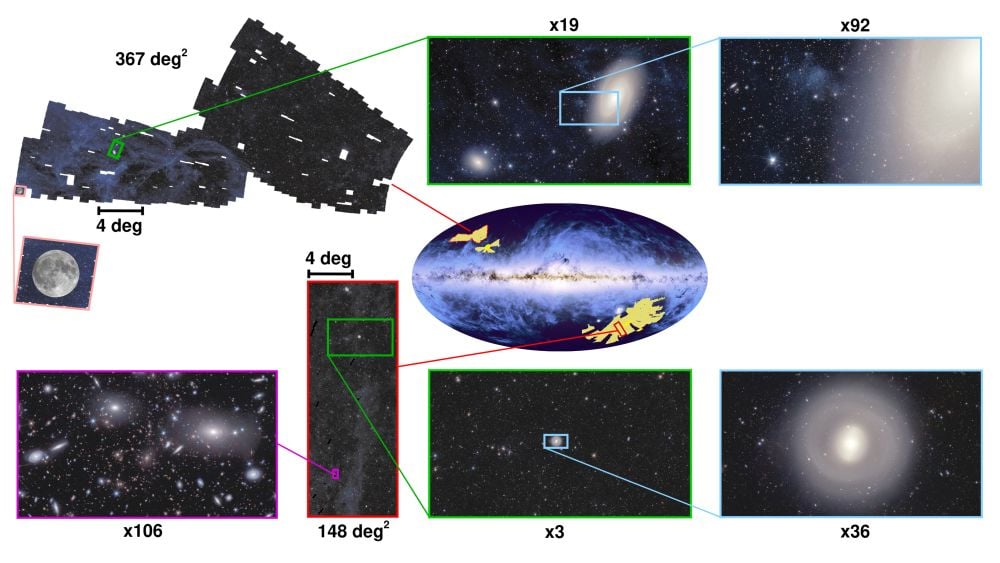
The European Space Agency has unveiled the first year of data from the Euclid telescope, capturing light from over one billion cosmic objects.
 🚀Space
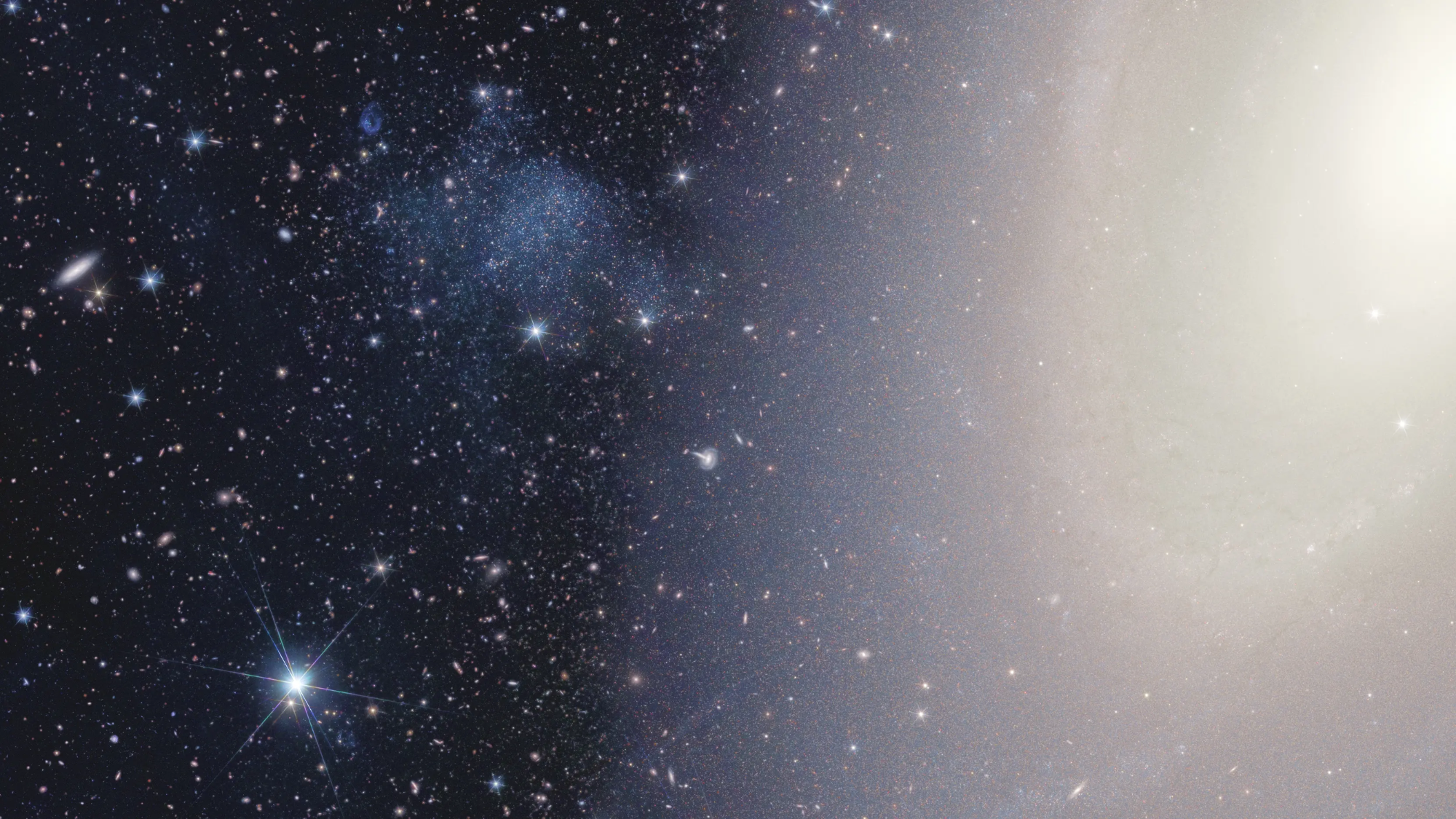
The European Space Agency has unveiled the DR1-Foundation data release, providing a massive survey of over a billion cosmic objects.
 🚀Space
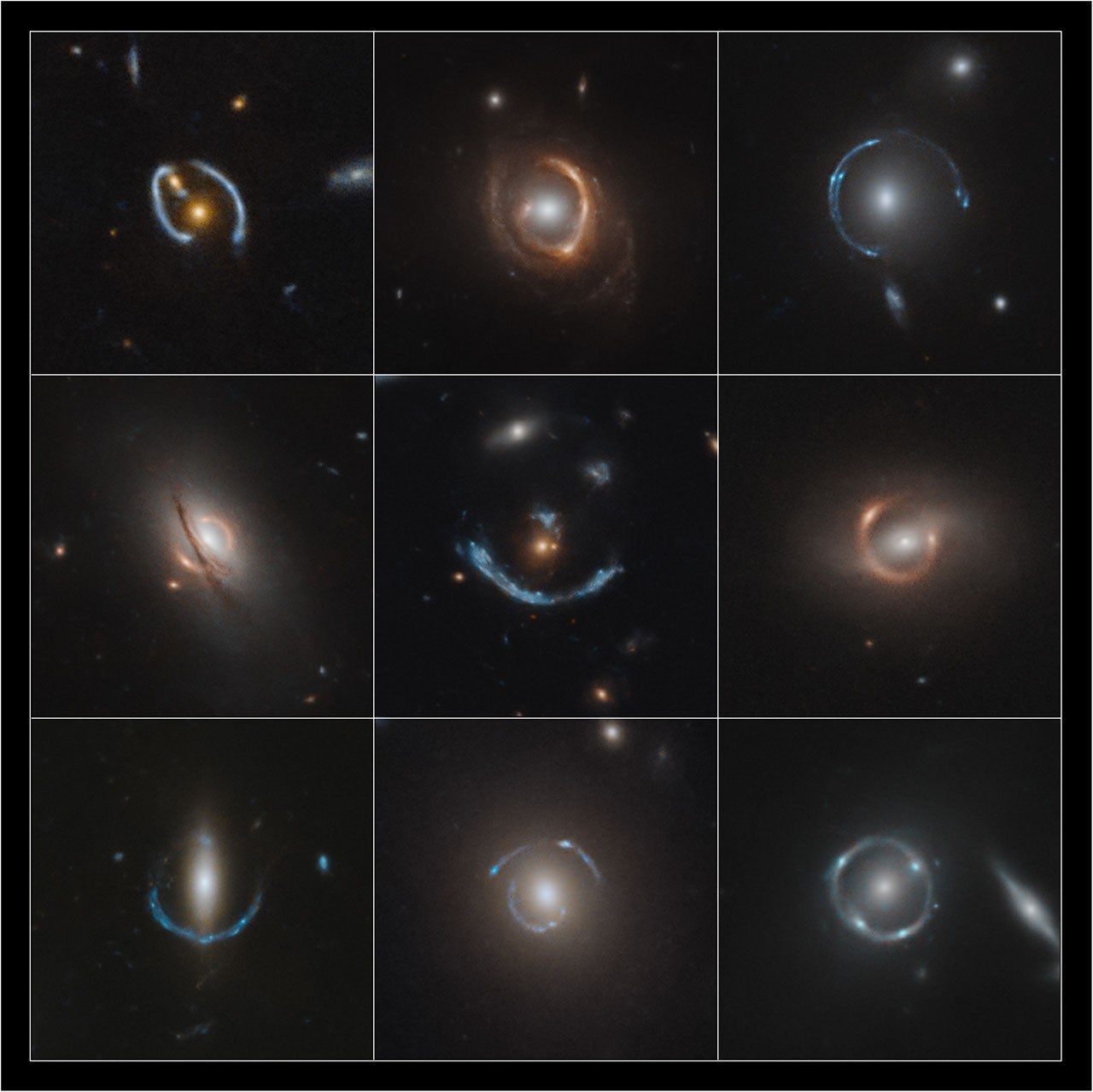
Hubble has captured a diverse collection of gravitational lenses, providing a foundation for the upcoming Nancy Grace Roman Space Telescope to study dark matter.
 🔬Science
The ALPS II collaboration has released results from its initial science campaign, setting new sensitivity benchmarks in the search for axions, a primary candidate for dar…
 🔬Science
Researchers have accelerated a microscopic rotor inside a superconducting trap to a record-breaking 2.3 million revolutions per second.
 🔬Science
Researchers have identified AGC 322753, an object containing massive amounts of hydrogen but almost no stars, challenging current theories of galaxy evolution.
 🔬Science
Researchers from the University of Ottawa have developed the CCC+TL model, which accounts for cosmic evolution without relying on dark matter or dark energy.
Got a tip, a proposal or a partnership question? Write to us and we will reply shortly.