Beyond Instantaneous: How Ole Rømer Deciphered the Speed of Light 348 Years Ago
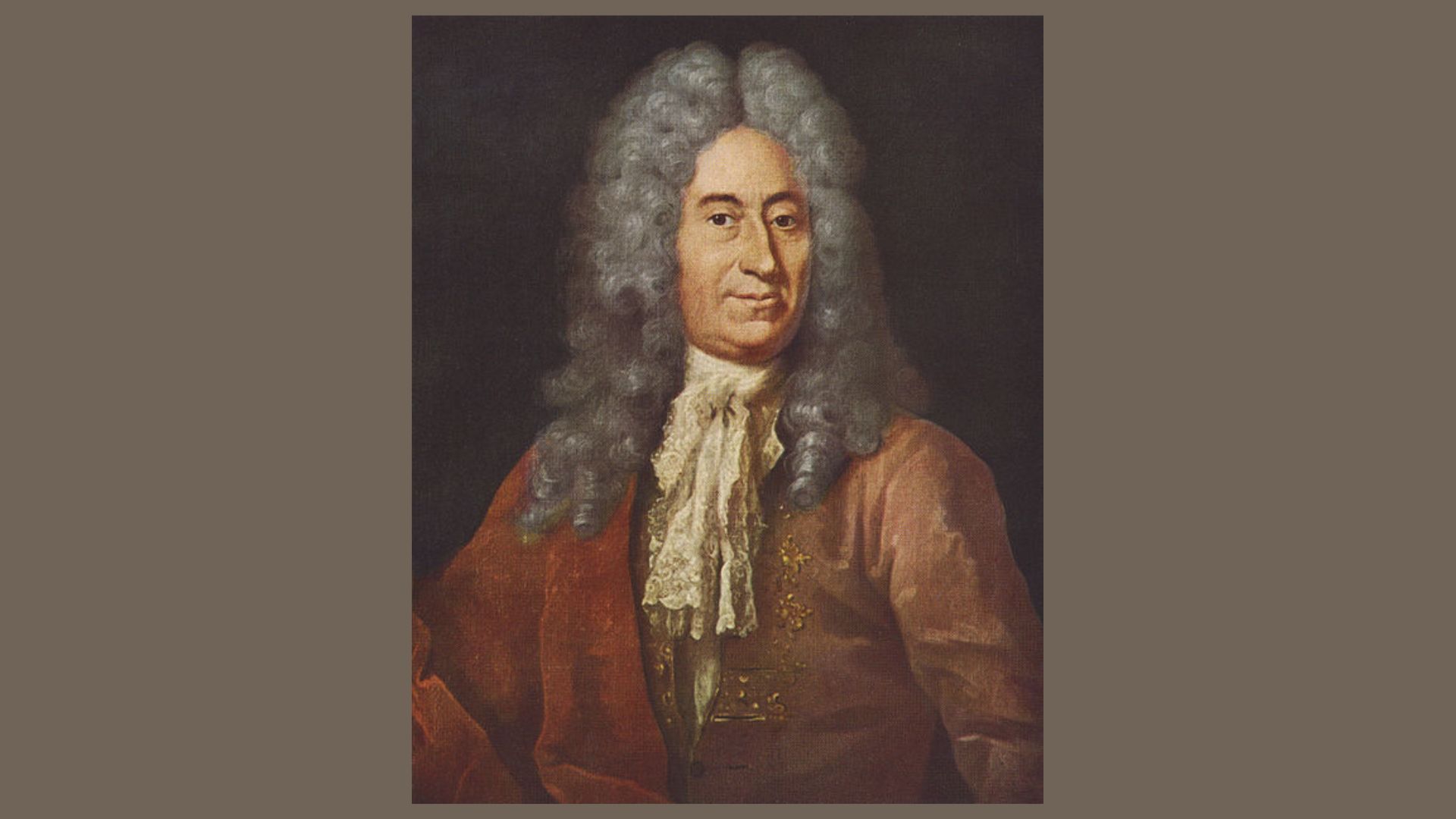
On November 21, 1676, Danish astronomer Ole Rømer presented evidence that light travels at a finite speed, fundamentally altering our understanding of the cosmos.
 🚀Space
Photo: Space.com
Key points
- Ole Rømer proved light has a finite speed on Nov. 21, 1676.
- The discovery resulted from observing timing shifts in Jupiter's moon Io.
- The 11-minute timing variations correlated with the distance between Earth and Jupiter.
November 21, 1676, marks a pivotal moment in the history of science. On this day, Danish astronomer Ole Rømer presented evidence to the Royal Academy of Sciences that light travels at a finite speed. Before Rømer’s breakthrough, the prevailing scientific consensus was that light moved instantaneously or infinitely fast, an assumption that made measuring the true scale of the universe impossible.
Rømer’s discovery was largely accidental, emerging from his extensive study of Jupiter’s moon, Io. He was attempting to track Io’s orbit to create a reliable "cosmic clock" for navigation. By observing Io as it disappeared behind Jupiter and reappeared on the other side every 42 hours, Rømer hoped to establish a perfectly consistent celestial timetable.
The 11-Minute Discrepancy
To his surprise, Rømer noticed that the timing of these eclipses was inconsistent. When Earth was at its closest point to Jupiter, the eclipses occurred roughly 11 minutes earlier than expected. Conversely, when the two planets were at their farthest distance, the events lagged by 11 minutes. Rømer deduced that this variation was not a flaw in the moon's orbit but rather the time it took for light to travel the varying distance between the planets.
By identifying this pattern, Rømer was able to make an accurate prediction for an eclipse on November 9, 1676. When he presented his findings on November 21, he effectively debunked the idea of instantaneous light. This realization provided the first real glimpse into the vast distances of our solar system and beyond.
"The speed of light becomes a sort of ultimate speed limit," experts from Live Science noted, emphasizing that objects with mass cannot reach this velocity as it would require infinite energy.
Today, the finite speed of light is a cornerstone of modern physics, essential to Einstein’s theory of relativity and the functioning of global positioning systems (GPS). Rømer’s work transformed light from a mysterious, omnipresent force into a measurable constant that defines the physical boundaries of our reality.
Source Space.com — space.com/space-exploration/on-this-day-in-space-november-21-2026 ↗
Read next
 🛡️Cyber
Russia’s hybrid war on Europe is evolving but failing to deter Ukraine support, IISS report says
A report by the IISS highlights an increase in Russian sabotage and infrastructure attacks across Europe, noting however that the strategy has failed to weaken support fo…
 🔬Science
Biomolecular analysis reveals centuries-old embalming recipes for Egyptian crocodile mummies
A study of ancient Egyptian crocodile mummies shows that embalmers used the exact same beeswax and pine resin recipe centuries apart at a single site.
 🛡️Cyber
Cybersecurity Weekly Roundup: Ransomware Fraud, ChatGPT Sites Leaks, and New Defenses
The latest threat intelligence roundup covers charges against a recovery firm co-founder, web app exposure risks, software patches, and VirusTotal's new detection feature…
 💻Tech
Astronomers Witness Rare Stellar Merger as Red Giant Devours Companion Star
An international team of researchers used advanced ground- and space-based telescopes to document a rare cosmic event where a massive red giant swallowed its smaller stel…
 🌍World
NATO Fighter Jets Scrambled After Drone Enters Latvian Airspace
Latvian armed forces deployed Alliance aircraft and interceptors following a brief border breach by an unidentified unmanned aerial vehicle.
 🔬Science
Bacterial colonies turn themselves inside out when oxygen is scarce
An international research team discovered that Neisseria gonorrhoeae bacteria respond to oxygen depletion in the colony's center by reducing cell adhesion, triggering a p…