Joint ESA-JAXA BepiColombo probe arrives in orbit around Mercury after eight-year journey
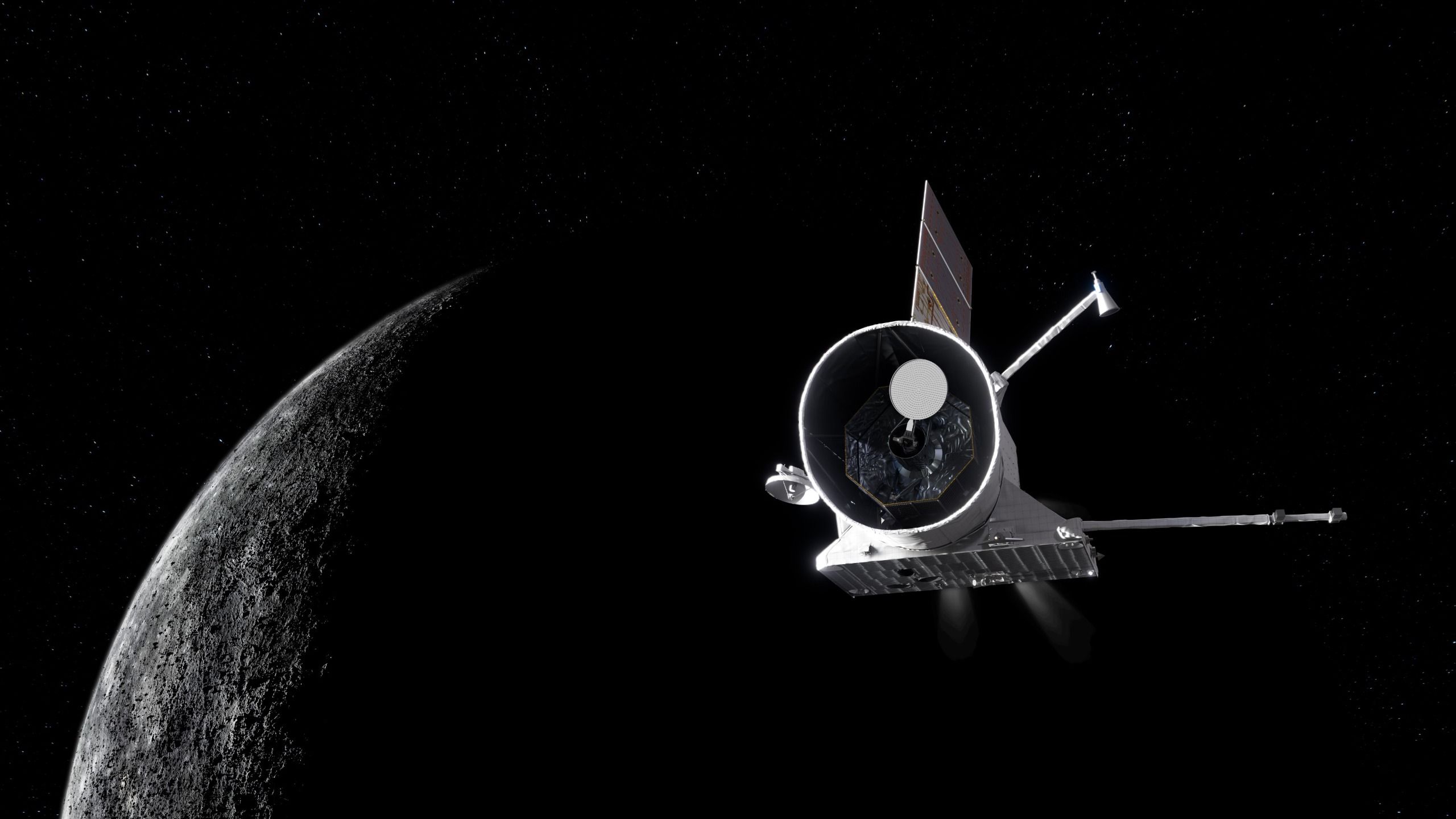
The BepiColombo spacecraft has begun its orbital insertion burn to enter orbit around Mercury following a long journey through the inner solar system.
 🚀Space
Photo: Space.com
Key points
- BepiColombo launched in October 2018 aboard an Ariane 5 rocket.
- The mission utilizes two orbiters: ESA's MPO and JAXA's Mio.
- Mercury's proximity to the Sun requires complex braking maneuvers and highly resilient spacecraft design.
The BepiColombo mission, a joint venture between the European Space Agency (ESA) and the Japan Aerospace Exploration Agency (JAXA), has reached a critical milestone in its long-duration flight. Today marks the scheduled orbital insertion maneuver designed to allow Mercury's gravity to capture the spacecraft, more than eight years after its departure from Earth in October 2018.
Reaching the innermost planet of the solar system is exceptionally difficult because the Sun's immense gravitational pull accelerates approaching spacecraft to extreme velocities. To shed sufficient kinetic energy, the mission team engineered a complex trajectory featuring multiple flybys of Earth, Venus, and Mercury. The timeline was extended by technical adjustments following an issue with the transfer module's solar arrays.
Dual-spacecraft configuration for comprehensive planetary science
The mission architecture comprises two primary science probes: ESA's Mercury Planetary Orbiter (MPO) and JAXA's Mercury Magnetospheric Orbiter (Mio). Initially transported together by a transfer module, the two probes are scheduled to separate in December before settling into their respective polar orbits.
Mio will occupy a highly elliptical orbit to study the planet's magnetosphere and solar wind interactions, while MPO will use a lower orbit to map the surface and investigate Mercury's massive iron core. Full science operations are scheduled to commence in April 2027 following a meticulous series of orbital adjustments.
Source Space.com — space.com/space-exploration/missions/esa-jaxa-bepicolomobo-mission-… ↗
Read next
 🛡️Cyber
Russia’s hybrid war on Europe is evolving but failing to deter Ukraine support, IISS report says
A report by the IISS highlights an increase in Russian sabotage and infrastructure attacks across Europe, noting however that the strategy has failed to weaken support fo…
 🔬Science
Biomolecular analysis reveals centuries-old embalming recipes for Egyptian crocodile mummies
A study of ancient Egyptian crocodile mummies shows that embalmers used the exact same beeswax and pine resin recipe centuries apart at a single site.
 🛡️Cyber
Cybersecurity Weekly Roundup: Ransomware Fraud, ChatGPT Sites Leaks, and New Defenses
The latest threat intelligence roundup covers charges against a recovery firm co-founder, web app exposure risks, software patches, and VirusTotal's new detection feature…
 💻Tech
Astronomers Witness Rare Stellar Merger as Red Giant Devours Companion Star
An international team of researchers used advanced ground- and space-based telescopes to document a rare cosmic event where a massive red giant swallowed its smaller stel…
 🌍World
NATO Fighter Jets Scrambled After Drone Enters Latvian Airspace
Latvian armed forces deployed Alliance aircraft and interceptors following a brief border breach by an unidentified unmanned aerial vehicle.
 🔬Science
Bacterial colonies turn themselves inside out when oxygen is scarce
An international research team discovered that Neisseria gonorrhoeae bacteria respond to oxygen depletion in the colony's center by reducing cell adhesion, triggering a p…