Foundation of Orbital History: Nov. 20, 1998 Launch of Zarya Module Began ISS Construction
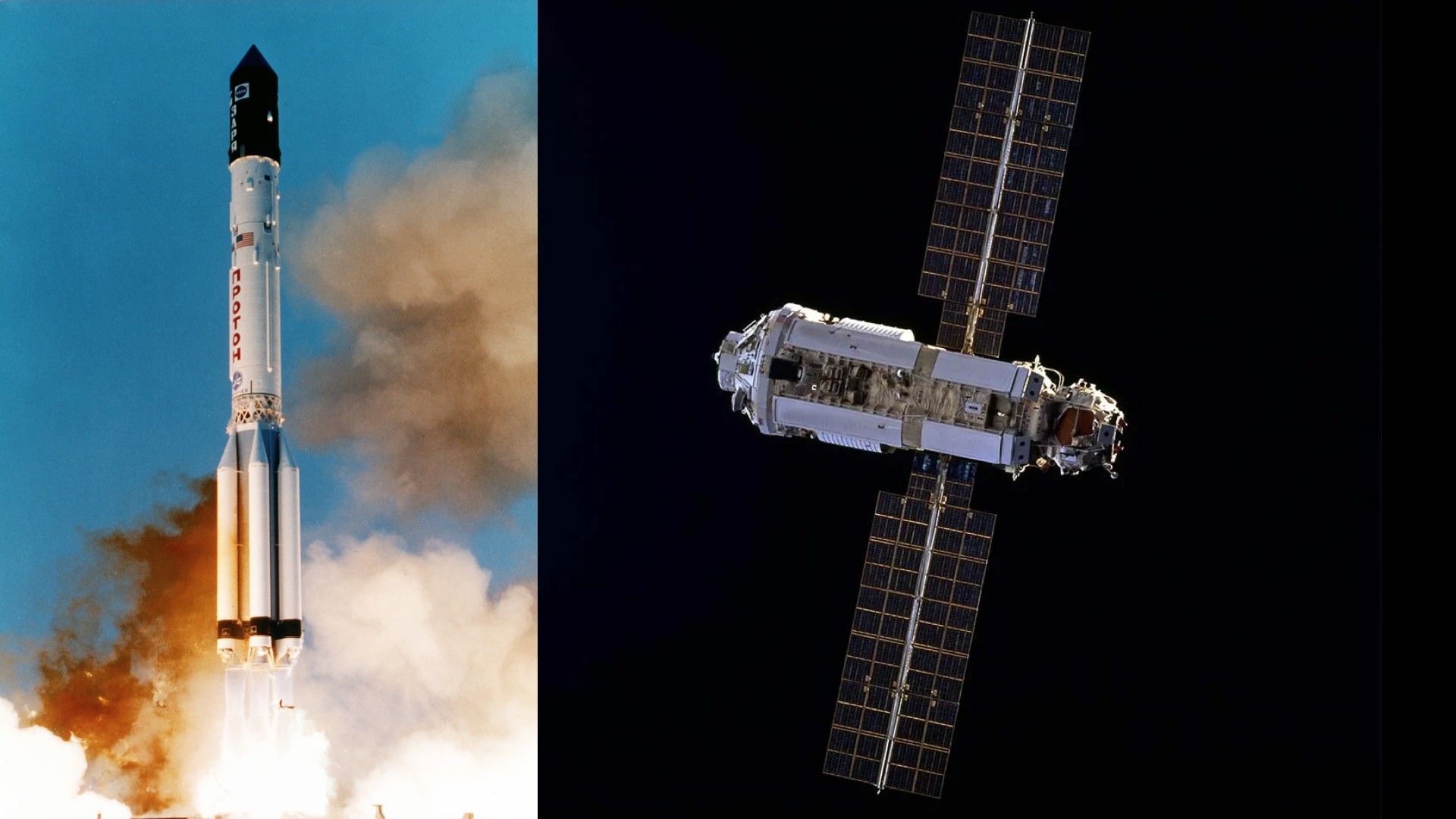
On November 20, 1998, the launch of the Zarya module aboard a Russian Proton rocket initiated the assembly of the International Space Station, the largest artificial structure in Earth orbit.
 🚀Space
Photo: Space.com
Key points
- Zarya launched on November 20, 1998, setting the foundation for the ISS.
- NASA financed the $220 million construction built by Russia's Khrunichev Center.
- The station has maintained continuous human presence since late 2000.
On November 20, 1998, a pivotal moment in space exploration occurred when a Russian Proton rocket lifted the 42,600-pound Zarya module into low Earth orbit. Serving as the primary cornerstone of the International Space Station (ISS), Zarya marked the beginning of an unprecedented global engineering initiative in space construction.
Although fabricated in Moscow at the Khrunichev State Research and Production Space Center, the module was fully funded by NASA through a $220 million contract. This agreement provided a cost-effective alternative, coming in at half the estimated price offered by U.S. contractor Lockheed Martin. Zarya's design drew heavily upon proven architectural frameworks from the earlier Salyut space station program.
From a Single Module to a Global Laboratory
Just two weeks following Zarya's arrival in orbit, NASA's Space Shuttle Endeavour launched on the STS-88 mission, carrying the American-built Unity connecting node. Astronauts successfully mated the two modules in space, forming the structural core of the fledgling station. However, continuous human occupation only began in 2000 after the arrival of the Zvezda service module enabled the Expedition 1 crew to move in.
Over the subsequent decades, the ISS expanded into a complex the size of a football field, integrating massive structural trusses, solar power arrays, and science laboratories built by international partners including Europe, Japan, Canada, and the United States. Remarkably, many of these modular components were joined together for the first time in orbit without prior ground-fit testing.
Today, Zarya functions primarily as a storage facility and fuel reservoir, while offering critical docking ports for incoming Progress cargo vessels and Soyuz crew craft.
Source Space.com — space.com/space-exploration/on-this-day-in-space-november-20-2026 ↗
Read next
 📈Business
Trump Administration Pressures Intel and Nvidia, Sparking Concerns Over State Control
Newly unsealed court documents reveal aggressive government pressure on Intel and Nvidia, shifting tech policy toward direct state stakes.
 🛡️Cyber
Russia’s hybrid war on Europe is evolving but failing to deter Ukraine support, IISS report says
A report by the IISS highlights an increase in Russian sabotage and infrastructure attacks across Europe, noting however that the strategy has failed to weaken support fo…
 🔬Science
Biomolecular analysis reveals centuries-old embalming recipes for Egyptian crocodile mummies
A study of ancient Egyptian crocodile mummies shows that embalmers used the exact same beeswax and pine resin recipe centuries apart at a single site.
 🛡️Cyber
Cybersecurity Weekly Roundup: Ransomware Fraud, ChatGPT Sites Leaks, and New Defenses
The latest threat intelligence roundup covers charges against a recovery firm co-founder, web app exposure risks, software patches, and VirusTotal's new detection feature…
 💻Tech
Astronomers Witness Rare Stellar Merger as Red Giant Devours Companion Star
An international team of researchers used advanced ground- and space-based telescopes to document a rare cosmic event where a massive red giant swallowed its smaller stel…
 🌍World
NATO Fighter Jets Scrambled After Drone Enters Latvian Airspace
Latvian armed forces deployed Alliance aircraft and interceptors following a brief border breach by an unidentified unmanned aerial vehicle.