NASA Invests $171 Million in Small Business Innovations for Lunar and Martian Exploration
NASA has selected 302 innovative projects from small businesses, providing up to $171 million in seed funding for Moon and Mars missions.
 🚀Space
Photo: NASA Breaking News
Key points
- NASA awards up to $171 million to 302 small business projects
- Funding supports Phase I and Phase II contracts for Moon and Mars exploration
- Selected technologies include rollable solar arrays, tactile robotic arms, and cold-tolerant batteries
- Initiatives directly contribute to the Artemis program and lunar infrastructure development
The U.S. space agency continues to leverage private-sector ingenuity to tackle critical technological challenges required for sustainable exploration of the Moon and Mars. NASA’s Small Business Innovation Research and Small Business Technology Transfer (SBIR/STTR) program has recently selected 302 innovative projects, allocating up to $171 million in early-stage seed funding to drive the U.S. space economy forward.
Funding Phases and Advanced Capabilities
The SBIR/STTR initiative provides a structured pathway for startups, entrepreneurs, and small enterprises to mature and commercialize technologies for agency missions. The latest selections involve two core phases. Phase I contracts receive up to $225,000 each to establish the merit and feasibility of proposed ideas, with some awards supporting partnerships between small businesses and research institutions.
Meanwhile, Phase II features 98 contracts valued at up to $1.3 million each, continuing development from previous projects toward demonstration and delivery. The selected portfolio covers a wide array of mission-critical needs, including infrastructure preparation for the Artemis program and future U.S. Moon base operations.
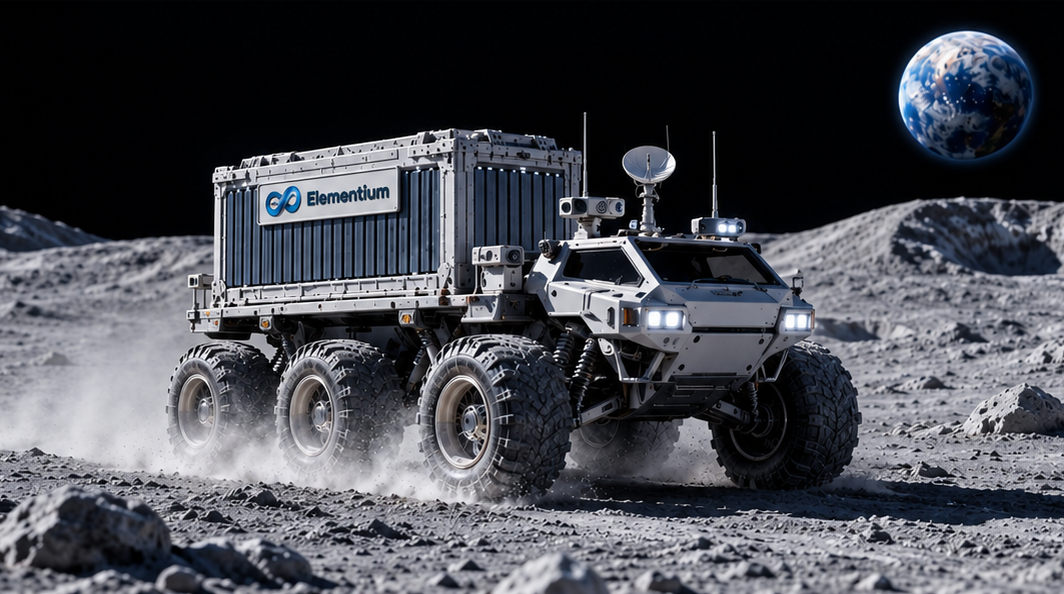
Notable examples include Opterus Research and Development’s modular rollable solar arrays, designed to operate in dusty environments and scale up to 50 kilowatts for surface power. Intelligent Fiber Optic Systems is developing a 10-foot robotic arm equipped with both optical cameras and touch sensors to automate complex lunar tasks. Additionally, Elementium Materials is working on ultra-cold-tolerant battery modules that eliminate the need for active heating during the 14-day lunar night, while Slate Geotechnical Consultants and the Colorado School of Mines are evaluating methods to build durable, reusable lunar landing pads.
Source NASA Breaking News — nasa.gov/directorates/rtmd/new-nasa-seed-funding-primes-small-busin… ↗
Read next
 📈Business
Trump Administration Pressures Intel and Nvidia, Sparking Concerns Over State Control
Newly unsealed court documents reveal aggressive government pressure on Intel and Nvidia, shifting tech policy toward direct state stakes.
 🛡️Cyber
Russia’s hybrid war on Europe is evolving but failing to deter Ukraine support, IISS report says
A report by the IISS highlights an increase in Russian sabotage and infrastructure attacks across Europe, noting however that the strategy has failed to weaken support fo…
 🔬Science
Biomolecular analysis reveals centuries-old embalming recipes for Egyptian crocodile mummies
A study of ancient Egyptian crocodile mummies shows that embalmers used the exact same beeswax and pine resin recipe centuries apart at a single site.
 🛡️Cyber
Cybersecurity Weekly Roundup: Ransomware Fraud, ChatGPT Sites Leaks, and New Defenses
The latest threat intelligence roundup covers charges against a recovery firm co-founder, web app exposure risks, software patches, and VirusTotal's new detection feature…
 💻Tech
Astronomers Witness Rare Stellar Merger as Red Giant Devours Companion Star
An international team of researchers used advanced ground- and space-based telescopes to document a rare cosmic event where a massive red giant swallowed its smaller stel…
 🌍World
NATO Fighter Jets Scrambled After Drone Enters Latvian Airspace
Latvian armed forces deployed Alliance aircraft and interceptors following a brief border breach by an unidentified unmanned aerial vehicle.