A historic milestone: 19 years since Hayabusa's first-ever asteroid liftoff
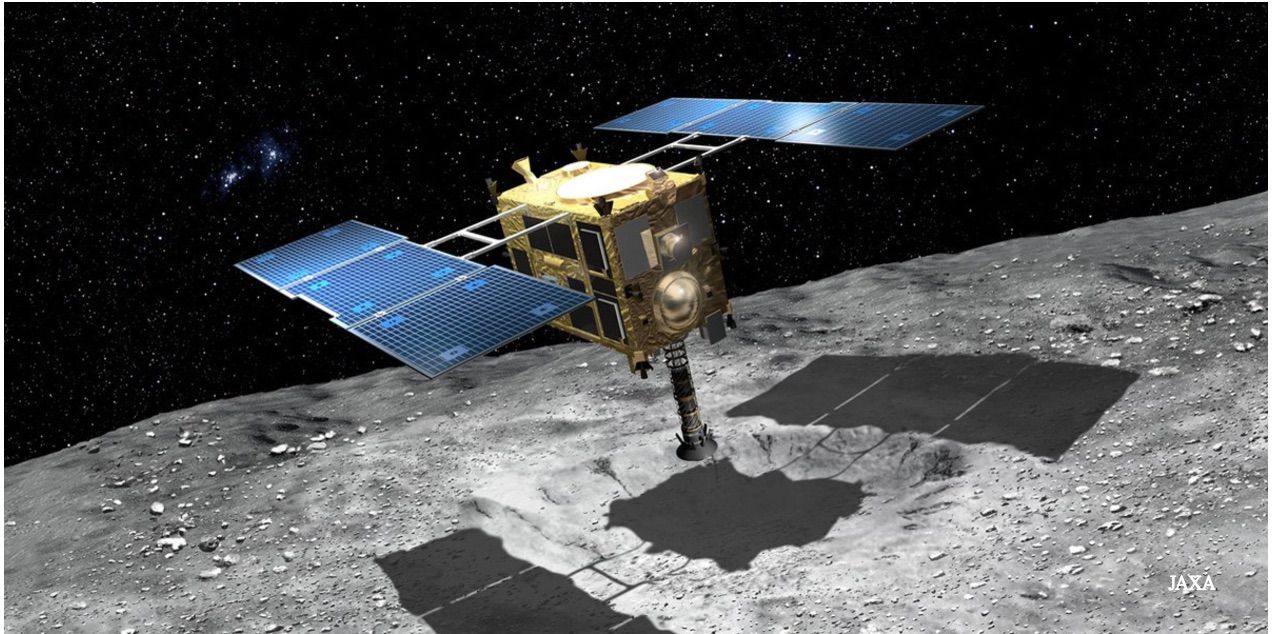
On November 19, 2005, Japan's Hayabusa spacecraft made history by successfully lifting off from the surface of the asteroid Itokawa.
 🚀Space
Photo: Space.com
Key points
- First-ever asteroid liftoff
- Successful extraterrestrial sample return
- Technological legacy of Hayabusa missions
In November 2005, the Japan Aerospace Exploration Agency (JAXA) achieved a breakthrough in solar system exploration. Despite facing significant technical challenges, the Hayabusa mission successfully executed the first-ever liftoff from the surface of an asteroid, Itokawa. This milestone was a critical step in advancing technologies for returning extraterrestrial samples to Earth.
Mission challenges and achievements
The journey to the asteroid was hampered by solar flares that degraded the spacecraft's solar arrays, limiting power to its ion engines. Upon arriving at the target in September 2005, Hayabusa performed two landing attempts. During the first touchdown on November 19, the probe spent approximately 39 minutes on the surface before successfully ascending back into space.
While engineers were initially uncertain if the sampling mechanism had functioned correctly, post-mission analysis following the capsule's return in 2010 confirmed the success: 1,500 dust grains from Itokawa were recovered. This achievement paved the way for the follow-up Hayabusa2 mission, which successfully explored the asteroid Ryugu.
Source Space.com — space.com/space-exploration/on-this-day-in-space-november-19-2005 ↗
Read next
 📈Business
Trump Administration Pressures Intel and Nvidia, Sparking Concerns Over State Control
Newly unsealed court documents reveal aggressive government pressure on Intel and Nvidia, shifting tech policy toward direct state stakes.
 🛡️Cyber
Russia’s hybrid war on Europe is evolving but failing to deter Ukraine support, IISS report says
A report by the IISS highlights an increase in Russian sabotage and infrastructure attacks across Europe, noting however that the strategy has failed to weaken support fo…
 🔬Science
Biomolecular analysis reveals centuries-old embalming recipes for Egyptian crocodile mummies
A study of ancient Egyptian crocodile mummies shows that embalmers used the exact same beeswax and pine resin recipe centuries apart at a single site.
 🛡️Cyber
Cybersecurity Weekly Roundup: Ransomware Fraud, ChatGPT Sites Leaks, and New Defenses
The latest threat intelligence roundup covers charges against a recovery firm co-founder, web app exposure risks, software patches, and VirusTotal's new detection feature…
 💻Tech
Astronomers Witness Rare Stellar Merger as Red Giant Devours Companion Star
An international team of researchers used advanced ground- and space-based telescopes to document a rare cosmic event where a massive red giant swallowed its smaller stel…
 🌍World
NATO Fighter Jets Scrambled After Drone Enters Latvian Airspace
Latvian armed forces deployed Alliance aircraft and interceptors following a brief border breach by an unidentified unmanned aerial vehicle.