NASA's Voyager 1 probe reaches one light-day distance from Earth
NASA's historic Voyager 1 spacecraft has crossed a major milestone, with commands now taking a full 24 hours to reach the distant probe. The aging mission continues to gather vital interstellar data.
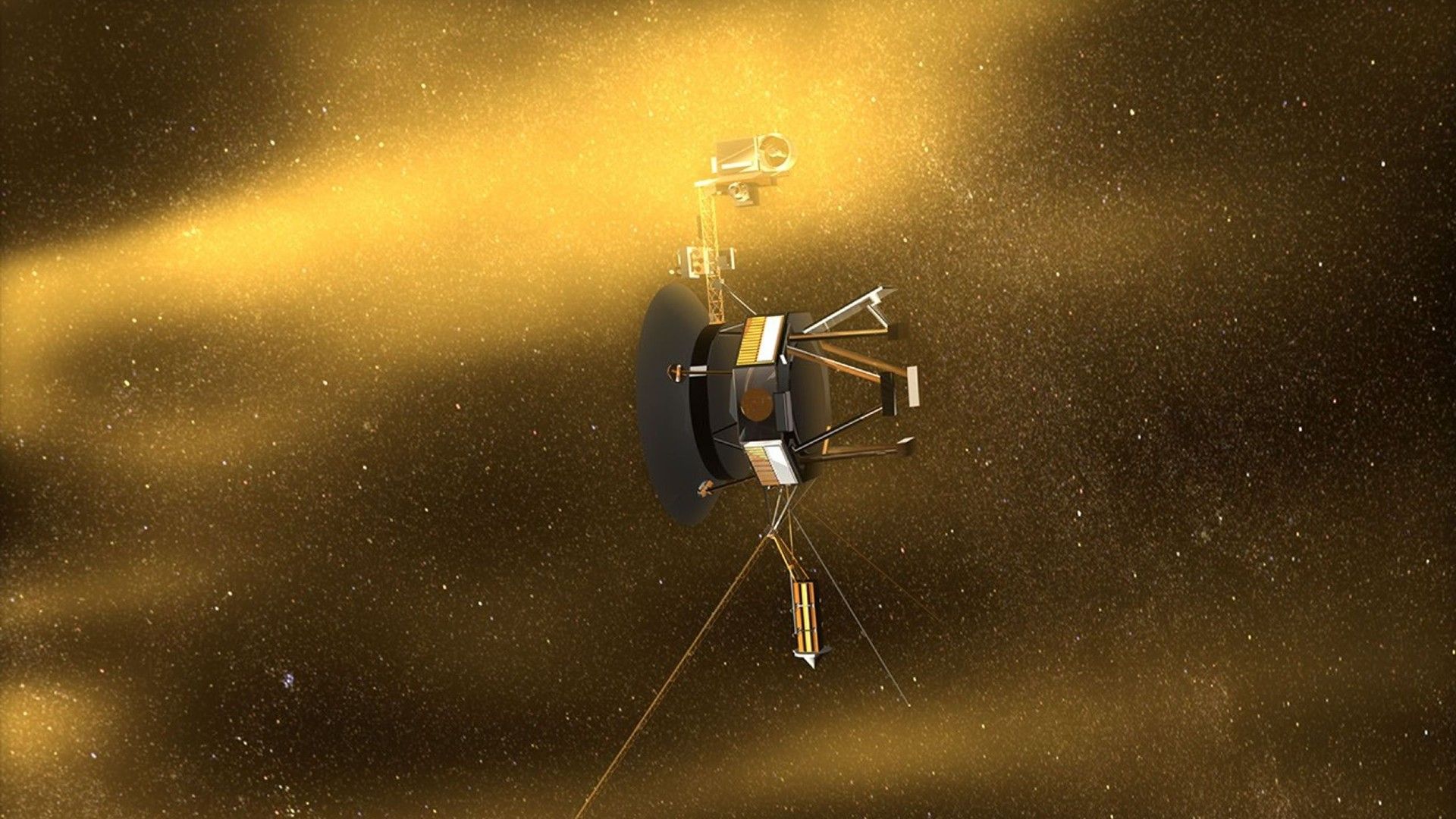 🚀Space
Photo: Space.com
Key points
- Voyager 1 is now one light-day away from Earth
- The spacecraft has been operating in interstellar space since 2012
- Nuclear power sources continue to decline by 4 watts annually
The United States space agency NASA has recorded a historic milestone in deep space exploration as the Voyager 1 probe reached a distance where light takes a full 24 hours to travel from Earth. Communicating with the distant spacecraft now requires waiting a complete day for signals to complete a round trip.
Launched in 1977 to explore the outer solar system, the Voyager twins conducted close-up flybys of Jupiter and Saturn before charting distinct trajectories. Voyager 1 crossed the heliopause into interstellar space in August 2012, while Voyager 2 followed into the interstellar medium in November 2018, continuing to return unprecedented scientific telemetry.
Scientific Objectives and Power Management
Current research focuses on measuring magnetic field strength and orientation, plasma density, and energetic particle detection. According to Suzanne Dodd, project manager for the Voyager missions at NASA's Jet Propulsion Laboratory (JPL), scientists aim to understand how these phenomena evolve further away from the sun. Project scientist Linda Spilker noted that the team is also investigating the exact boundary where solar influence ends and pristine interstellar space begins.
Operating these vintage spacecraft presents steep engineering hurdles as their nuclear power sources steadily lose about 4 watts of power annually from an original 470-watt output in 1977. To preserve remaining instruments, engineers executed a major power redistribution earlier this year. The JPL team anticipates no major operational changes until the missions approach their 50th anniversaries next year, despite very thin power margins, extreme cold, and occasional communication glitches.
Source Space.com — space.com/space-exploration/voyager/whats-next-for-nasa-interstella… ↗
Read next
 📈Business
Trump Administration Pressures Intel and Nvidia, Sparking Concerns Over State Control
Newly unsealed court documents reveal aggressive government pressure on Intel and Nvidia, shifting tech policy toward direct state stakes.
 🛡️Cyber
Russia’s hybrid war on Europe is evolving but failing to deter Ukraine support, IISS report says
A report by the IISS highlights an increase in Russian sabotage and infrastructure attacks across Europe, noting however that the strategy has failed to weaken support fo…
 🔬Science
Biomolecular analysis reveals centuries-old embalming recipes for Egyptian crocodile mummies
A study of ancient Egyptian crocodile mummies shows that embalmers used the exact same beeswax and pine resin recipe centuries apart at a single site.
 🛡️Cyber
Cybersecurity Weekly Roundup: Ransomware Fraud, ChatGPT Sites Leaks, and New Defenses
The latest threat intelligence roundup covers charges against a recovery firm co-founder, web app exposure risks, software patches, and VirusTotal's new detection feature…
 💻Tech
Astronomers Witness Rare Stellar Merger as Red Giant Devours Companion Star
An international team of researchers used advanced ground- and space-based telescopes to document a rare cosmic event where a massive red giant swallowed its smaller stel…
 🌍World
NATO Fighter Jets Scrambled After Drone Enters Latvian Airspace
Latvian armed forces deployed Alliance aircraft and interceptors following a brief border breach by an unidentified unmanned aerial vehicle.