Voyager 1 probe reaches historic one light-day milestone from Earth
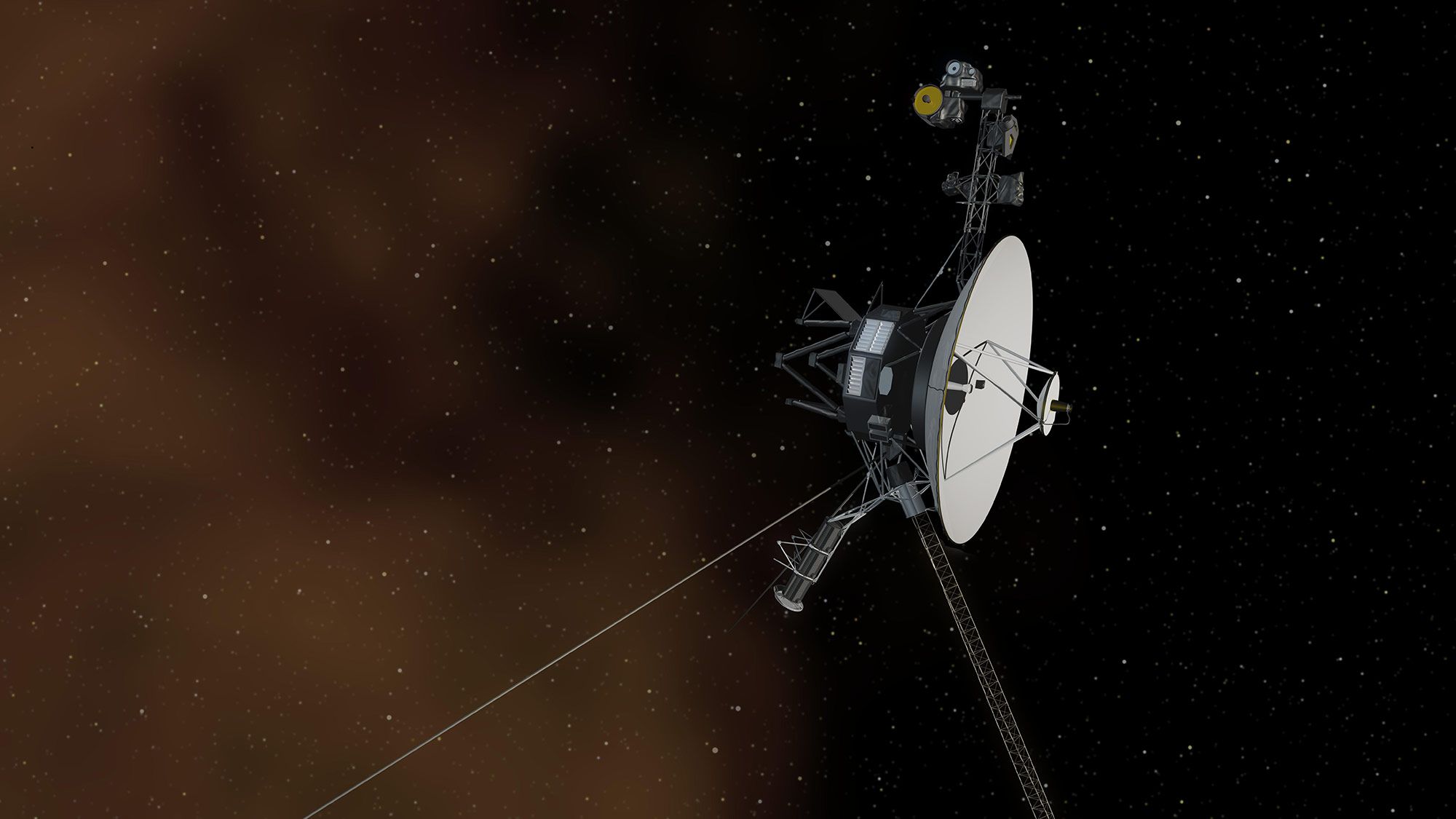
NASA's Voyager 1 spacecraft has set a new record, reaching a distance of one light-day from Earth after nearly five decades in space.
 🚀Space
Photo: Space.com
Key points
- Voyager 1 reaches one light-day distance from Earth
- Spacecraft launched in September 1977 on a fast trajectory
- Probe continues exploring interstellar medium after leaving heliosphere
NASA's iconic interstellar probe Voyager 1 has crossed another remarkable milestone in its historic journey across the cosmos. The spacecraft is now exactly one light-day away from Earth, representing a distance of roughly 16 billion miles or 26 billion kilometers. Consequently, radio signals traveling at light speed now require a full 24 hours to bridge the gap between Mission Control and the probe.
Launched on September 5, 1977, Voyager 1 took a faster trajectory than its twin, Voyager 2. Throughout its unprecedented trek through the solar system, the probe delivered countless groundbreaking discoveries, including active volcanoes on Jupiter's moon Io, new rings and moons around Saturn and Jupiter, and the dense atmosphere surrounding Titan. Project scientist Linda Spilker highlighted the uniqueness of the occasion, noting that this is the first time a human-made object has ever achieved a one light-day distance.
Today, both Voyager probes are exploring interstellar space after crossing the heliosphere boundary in 2012. Moving through the cosmic medium at roughly 38,000 miles per hour, Voyager 1 continues to rely on legacy engineering that still underpins modern planetary exploration. Decades-old images and data captured by the spacecraft remain crucial references for upcoming missions directed at the outer solar system's ocean worlds.
Source Space.com — space.com/space-exploration/voyager/1-light-day-from-earth-nasas-vo… ↗
Read next
 📈Business
Trump Administration Pressures Intel and Nvidia, Sparking Concerns Over State Control
Newly unsealed court documents reveal aggressive government pressure on Intel and Nvidia, shifting tech policy toward direct state stakes.
 🛡️Cyber
Russia’s hybrid war on Europe is evolving but failing to deter Ukraine support, IISS report says
A report by the IISS highlights an increase in Russian sabotage and infrastructure attacks across Europe, noting however that the strategy has failed to weaken support fo…
 🔬Science
Biomolecular analysis reveals centuries-old embalming recipes for Egyptian crocodile mummies
A study of ancient Egyptian crocodile mummies shows that embalmers used the exact same beeswax and pine resin recipe centuries apart at a single site.
 🛡️Cyber
Cybersecurity Weekly Roundup: Ransomware Fraud, ChatGPT Sites Leaks, and New Defenses
The latest threat intelligence roundup covers charges against a recovery firm co-founder, web app exposure risks, software patches, and VirusTotal's new detection feature…
 💻Tech
Astronomers Witness Rare Stellar Merger as Red Giant Devours Companion Star
An international team of researchers used advanced ground- and space-based telescopes to document a rare cosmic event where a massive red giant swallowed its smaller stel…
 🌍World
NATO Fighter Jets Scrambled After Drone Enters Latvian Airspace
Latvian armed forces deployed Alliance aircraft and interceptors following a brief border breach by an unidentified unmanned aerial vehicle.