Stellar Marathon: Why Voyager 1 Outpaced Voyager 2 to a Light-Day Milestone
NASA's Voyager 1 is set to reach a distance of one light-day from Earth, while its twin Voyager 2 will not hit the milestone until around 2035 due to distinct trajectories and gravity assists.
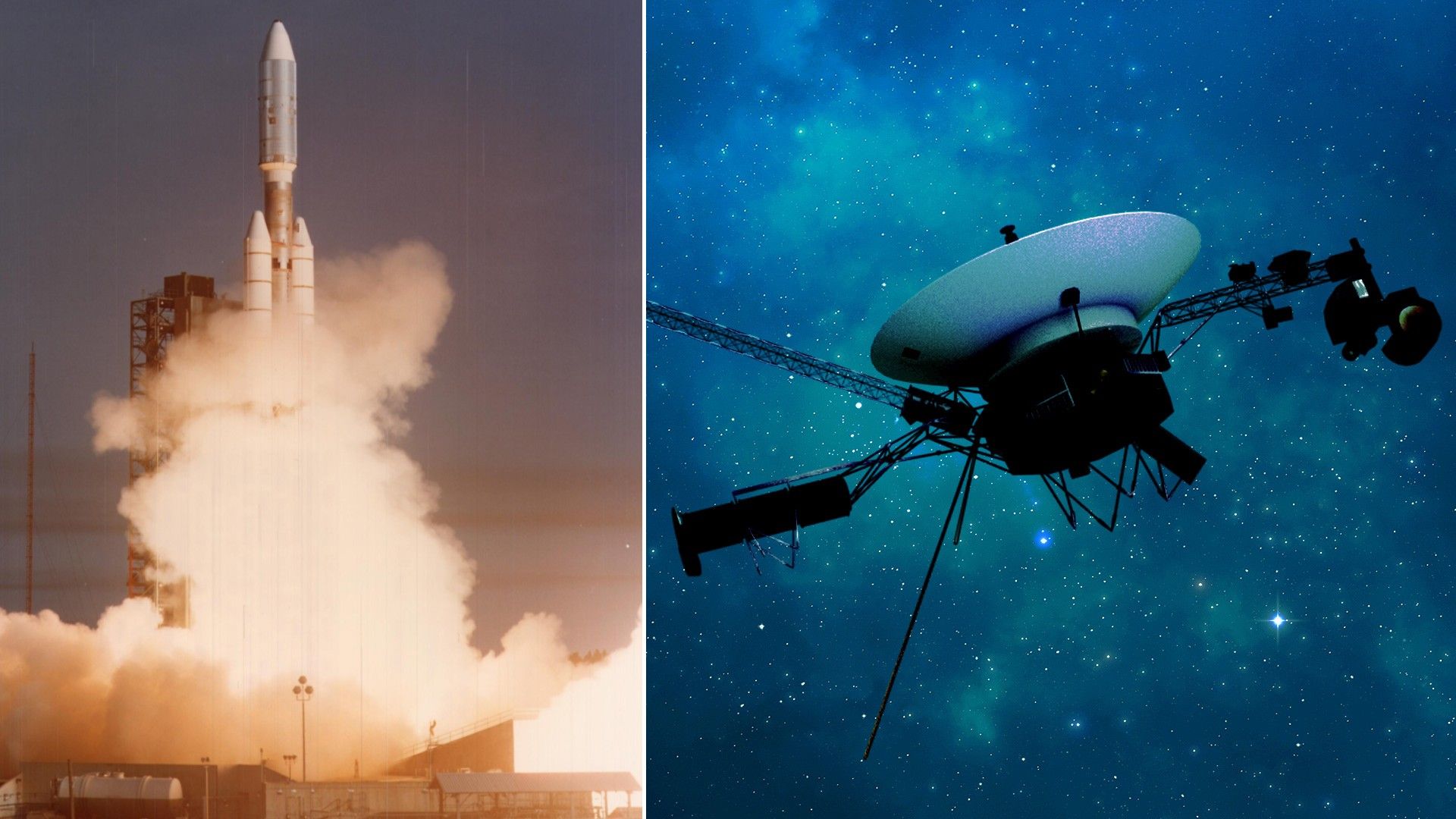 🚀Space
Photo: Space.com
Key points
- Voyager 1 will reach the one light-day mark in November
- Voyager 2 trails by a decade due to differing planetary flybys and paths
- Gravity assists at Jupiter and Saturn substantially boosted both probes
- Speed difference stands at 3.5 versus 3.1 astronomical units per year
In November, NASA's Voyager 1 spacecraft will achieve another historical milestone in its unprecedented journey. The probe will be positioned at such a vast distance from our planet that a radio signal will take a full 24 hours to reach it, traversing a gap of over 16 billion miles. Despite Voyager 2 launching two weeks earlier back in 1977, it lags roughly a decade behind its sibling. The underlying question is why two nearly synchronized spacecraft diverged so significantly in time and space while exploring the solar system.
Trajectories and Gravity Assists
The secret behind the speed disparity lies in individual routing and scientific priorities established at the onset of the missions. Initially, both spacecraft were tasked with observing Jupiter and Saturn. However, NASA engineers opted for a faster trajectory for Voyager 1. The probe overtook Voyager 2 on the approach to Jupiter, arriving four months earlier. Furthermore, Voyager 1 executed a targeted flyby near Saturn's moon Titan before steering outside the plane of the solar system.
Meanwhile, Voyager 2 gained a rare opportunity to visit Uranus and Neptune, leveraging a rare planetary alignment. Each flyby of the gas giants involved a gravity assist maneuver acting as a cosmic slingshot. According to the Planetary Society, because planets possess vastly greater mass, the spacecraft gained significant momentum—roughly 10 km/s at Jupiter—while the physical impact on the planets themselves remained entirely unmeasurable.
Speed Differences and Final Path
Nevertheless, not every maneuver increased forward velocity. During its encounter with Neptune, Voyager 2 performed a precise turn around the moon Triton, which directed its trajectory downward and out of the solar system's plane while shedding speed. Consequently, Voyager 1 currently zooms outward at a clip of about 3.5 astronomical units per year, whereas Voyager 2 maintains a more stately pace of 3.1 units.
These flight dynamics highlight the critical importance of meticulous trajectory planning during launch phases. Decisions made nearly fifty years ago continue to dictate the deep-space fate of these legendary probes, offering enduring lessons for interstellar exploration.
Source Space.com — space.com/space-exploration/voyager/nasas-voyager-1-launched-second… ↗
Read next
 📈Business
EU Budget Row: Macron Accuses Le Pen of Arrogance Amid Multiannual Funding Clash
Discussions over the European Union's next multiannual budget have sparked a fierce political showdown between French President Emmanuel Macron and far-right leader Marin…
 📈Business
Trump Administration Pressures Intel and Nvidia, Sparking Concerns Over State Control
Newly unsealed court documents reveal aggressive government pressure on Intel and Nvidia, shifting tech policy toward direct state stakes.
 🛡️Cyber
Russia’s hybrid war on Europe is evolving but failing to deter Ukraine support, IISS report says
A report by the IISS highlights an increase in Russian sabotage and infrastructure attacks across Europe, noting however that the strategy has failed to weaken support fo…
 🔬Science
Biomolecular analysis reveals centuries-old embalming recipes for Egyptian crocodile mummies
A study of ancient Egyptian crocodile mummies shows that embalmers used the exact same beeswax and pine resin recipe centuries apart at a single site.
 🛡️Cyber
Cybersecurity Weekly Roundup: Ransomware Fraud, ChatGPT Sites Leaks, and New Defenses
The latest threat intelligence roundup covers charges against a recovery firm co-founder, web app exposure risks, software patches, and VirusTotal's new detection feature…
 💻Tech
Astronomers Witness Rare Stellar Merger as Red Giant Devours Companion Star
An international team of researchers used advanced ground- and space-based telescopes to document a rare cosmic event where a massive red giant swallowed its smaller stel…