Glaciers on Indonesia's Puncak Jaya Have Dwindled to Stagnant Patches
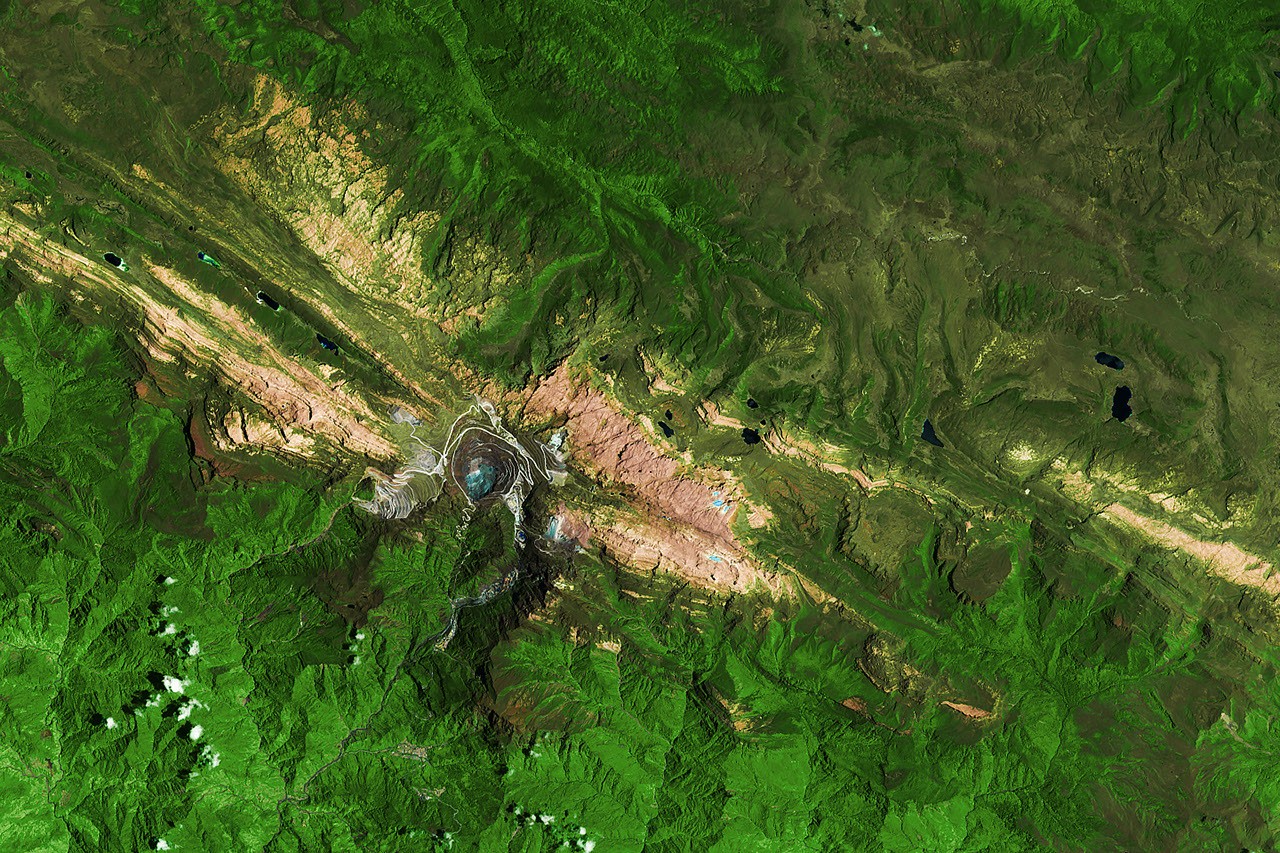
NASA satellite imagery reveals that tropical glaciers on the island of New Guinea have shrunk by 98% since 1988 and no longer flow.
 🚀Space
Photo: NASA News
Key points
- Puncak Jaya glaciers have shrunk to about 2% of their 1988 areal extent.
- Ice thickness at the main monitoring station dropped from 32 meters in 2010 to zero by late 2024.
- Stagnant ice remnants could disappear completely around 2030, hastened by El Niño conditions.
The remaining ice near the summit of Mount Puncak Jaya within Indonesia's Sudirman Range on New Guinea has shrunk to scattered fragments that are too small to function as active glaciers. Comparative satellite imagery acquired by NASA’s Landsat program between 1988 and 2026 highlights a dramatic environmental contraction. While the glaciers covered approximately 4.31 square kilometers in the late 1980s, satellite and aerial records showed that only about 0.09 square kilometers remained by late 2025.
According to Donaldi Permana, a climate scientist with Indonesia's BMKG, the ice has thinned drastically alongside the areal reduction. Measurements at the primary monitoring site indicated a drop in ice thickness from 32 meters in 2010 to 4 meters in 2023, with total disappearance recorded at that site by November 2024. As the ice thins and fractures, newly exposed bedrock absorbs more solar radiation, accelerating the melt rate and preventing fresh snow accumulations from forming new ice layers.
Having lost the necessary mass and thickness to move downhill under their own weight, the remaining ice remnants are now stagnant. Climate variability, particularly the warming effects of recent El Niño cycles, has further accelerated the decline by turning precipitation from snow into rain. Researchers warn that the primary glacial ice areas in this tropical region could vanish entirely around 2030 or even sooner.
“It’s a house of cards problem. Once this process gets going, there’s really no turning back,” said Chris Shuman, a retired University of Maryland glaciologist.
Source NASA News — science.nasa.gov/earth/earth-observatory/the-last-ice-on-puncak-jaya/ ↗
Read next
 📈Business
Trump Administration Pressures Intel and Nvidia, Sparking Concerns Over State Control
Newly unsealed court documents reveal aggressive government pressure on Intel and Nvidia, shifting tech policy toward direct state stakes.
 🛡️Cyber
Russia’s hybrid war on Europe is evolving but failing to deter Ukraine support, IISS report says
A report by the IISS highlights an increase in Russian sabotage and infrastructure attacks across Europe, noting however that the strategy has failed to weaken support fo…
 🔬Science
Biomolecular analysis reveals centuries-old embalming recipes for Egyptian crocodile mummies
A study of ancient Egyptian crocodile mummies shows that embalmers used the exact same beeswax and pine resin recipe centuries apart at a single site.
 🛡️Cyber
Cybersecurity Weekly Roundup: Ransomware Fraud, ChatGPT Sites Leaks, and New Defenses
The latest threat intelligence roundup covers charges against a recovery firm co-founder, web app exposure risks, software patches, and VirusTotal's new detection feature…
 💻Tech
Astronomers Witness Rare Stellar Merger as Red Giant Devours Companion Star
An international team of researchers used advanced ground- and space-based telescopes to document a rare cosmic event where a massive red giant swallowed its smaller stel…
 🌍World
NATO Fighter Jets Scrambled After Drone Enters Latvian Airspace
Latvian armed forces deployed Alliance aircraft and interceptors following a brief border breach by an unidentified unmanned aerial vehicle.