New Navigation Method Uses Shadows and Power Meters to Track Spacecraft in Lunar Orbit
Researchers have developed a cost-free navigation technique that uses solar panel power drops during eclipses to determine a spacecraft's position in space.
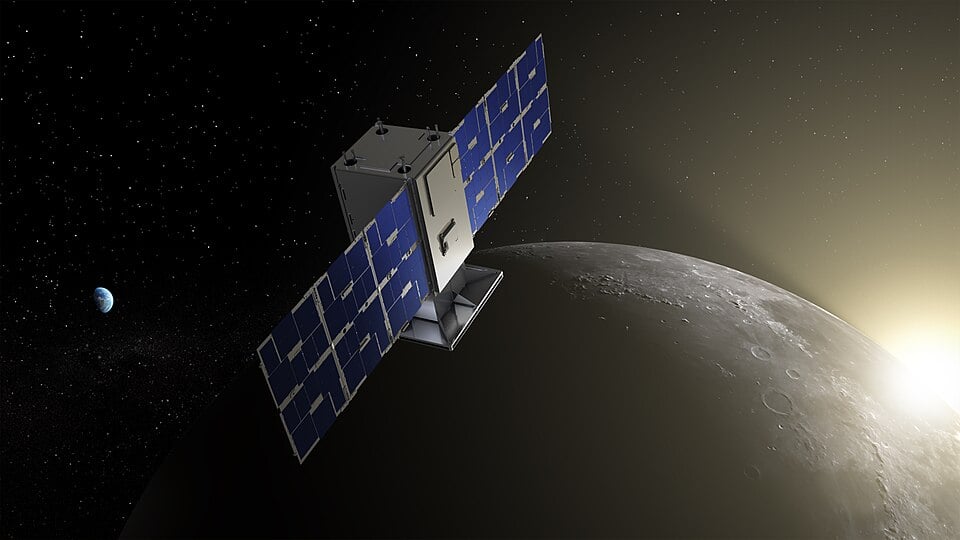 🚀Space
Photo: Universe Today
Key points
- New navigation algorithm uses solar array voltage drops during eclipses to track spacecraft position.
- The method was successfully validated using flight telemetry from the CAPSTONE mission.
- Processing eclipse data reduces positional uncertainty by more than 60% without extra hardware.
NASA's Deep Space Network (DSN) is facing unprecedented strain due to the rapidly growing number of deep space missions, prompting the search for alternative tracking methods. A team of researchers from Advanced Space, Space Exploration Engineering, and Texas A&M has proposed an innovative, no-cost solution: utilizing solar array data collected during spacecraft eclipses to pinpoint orbital locations.
Every spacecraft continuously tracks its solar array power output via Maximum Power Point Tracking algorithms. When a spacecraft enters a planetary eclipse, solar radiation drops precipitously while onboard electronics continue running on backup batteries. By precisely recording the timestamps when voltage begins to drop and recover, a navigation algorithm can calculate the spacecraft's three-dimensional coordinates without relying on cameras, star trackers, or radio signals.
The primary challenge stems from uneven shadows cast by cratered airbodies like the Moon or atmospheric refraction from Earth. To address this, the researchers integrated historical astronomical datasets spanning nearly two centuries with actual flight telemetry from the CAPSTONE CubeSat mission, which passed through the Moon's shadow in January 2026. Testing demonstrated that processing this eclipse data reduced positional uncertainty by over 60%.
Source Universe Today — universetoday.com/articles/navigating-lunar-orbit-using-nothing-but… ↗
Read next
 🛡️Cyber
Russia’s hybrid war on Europe is evolving but failing to deter Ukraine support, IISS report says
A report by the IISS highlights an increase in Russian sabotage and infrastructure attacks across Europe, noting however that the strategy has failed to weaken support fo…
 🔬Science
Biomolecular analysis reveals centuries-old embalming recipes for Egyptian crocodile mummies
A study of ancient Egyptian crocodile mummies shows that embalmers used the exact same beeswax and pine resin recipe centuries apart at a single site.
 🛡️Cyber
Cybersecurity Weekly Roundup: Ransomware Fraud, ChatGPT Sites Leaks, and New Defenses
The latest threat intelligence roundup covers charges against a recovery firm co-founder, web app exposure risks, software patches, and VirusTotal's new detection feature…
 💻Tech
Astronomers Witness Rare Stellar Merger as Red Giant Devours Companion Star
An international team of researchers used advanced ground- and space-based telescopes to document a rare cosmic event where a massive red giant swallowed its smaller stel…
 🌍World
NATO Fighter Jets Scrambled After Drone Enters Latvian Airspace
Latvian armed forces deployed Alliance aircraft and interceptors following a brief border breach by an unidentified unmanned aerial vehicle.
 🔬Science
Bacterial colonies turn themselves inside out when oxygen is scarce
An international research team discovered that Neisseria gonorrhoeae bacteria respond to oxygen depletion in the colony's center by reducing cell adhesion, triggering a p…