Solar Panels or Nuclear Reactors: Evaluating Power Options for Orbital Data Centers
Researchers examine the engineering constraints, mass limitations, and trade-offs of powering future data centers in space.
 🚀Space
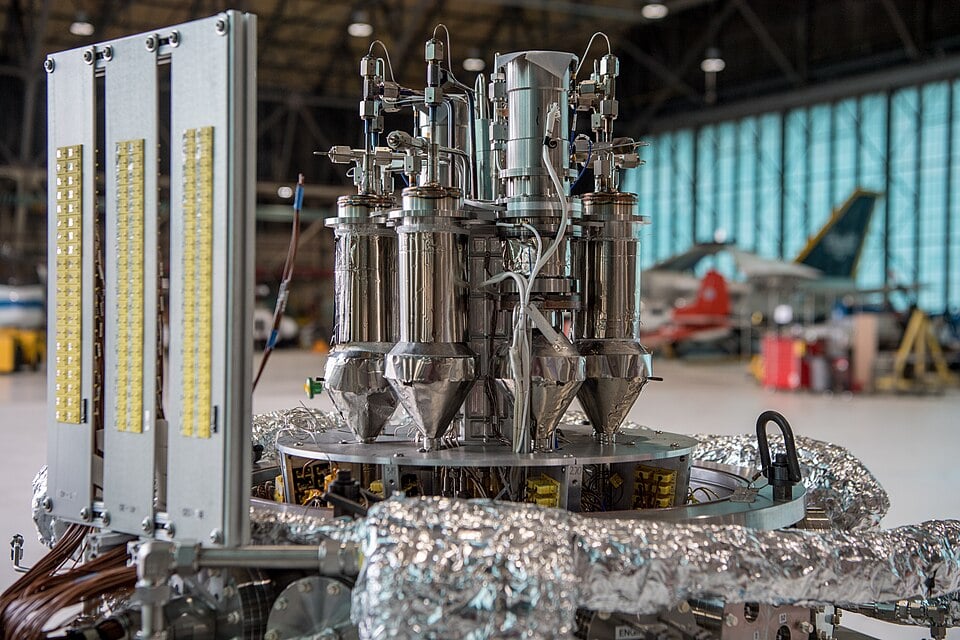
Photo: Universe Today
Key points
- Orbital data centers face recurring solar eclipses, spending over five hours daily in Earth's shadow.
- Battery storage required for solar-powered orbital servers adds prohibitive mass to space missions.
- Nuclear reactors reduce overall system weight but introduce complex radiation and thermal management challenges.
The concept of deploying computational infrastructure in Earth orbit is facing rigorous engineering scrutiny regarding power generation. According to recent calculations by researchers at NASA’s Jet Propulsion Laboratory, supplying energy to orbital data centers involves balancing severe mass constraints, thermal management challenges, and harsh space environments. As the industry looks beyond traditional solutions, the debate centers on choosing between advanced solar arrays and space-based nuclear fission reactors.
The Burden of Shadows and Battery Weight
Relying solely on solar power presents a major logistical hurdle due to orbital mechanics. Satellites regularly pass through Earth's shadow, spending hours per day in total darkness during specific orbital phases. To maintain uninterrupted operations, engineers must deploy massive battery storage systems. For a one-megawatt data center cluster, combining solar wings, heat-rejecting radiators, and heavy chemical batteries results in a substantial structural mass before accounting for any actual servers.
Fission reactors offer an appealing alternative by eliminating the need for solar wings and heavy storage batteries, potentially saving tons of mass per megawatt. However, nuclear power introduces complex thermal engineering hurdles, such as managing ultra-hot conversion waste heat separately from the lower temperatures required by standard server processors. Furthermore, placing an active reactor near sensitive computing hardware requires heavy radiation shielding and physical separation booms, which quickly erode the initial weight advantage. Consequently, hybrid systems combining both technologies may ultimately prove necessary.
Source Universe Today — universetoday.com/articles/should-space-data-centers-run-on-solar-p… ↗
Read next
 🛡️Cyber
Massive Drone Assault Hits Ukrainian Energy Grid and Russian Defense Facilities
A large-scale nocturnal drone attack damaged critical energy and transport infrastructure across multiple Ukrainian regions, prompting emergency power outages, while reta…
Spain Lets Anti-Money Laundering Unit Freeze Crypto Accounts Without a Court Order
The Spanish government has granted its financial intelligence unit, Sepblac, the authority to suspend transactions and freeze crypto accounts without prior judicial appro…
 🤖AI
SAP Plans to Cut at Least 10,000 Jobs in Major Pivot to Artificial Intelligence
German tech giant SAP is preparing a sweeping restructuring to integrate artificial intelligence tools, affecting roughly 9% of its global workforce.
 💻Tech
Roborock Robot Vacuums Receive Major Discounts for Black Friday
Season deals have hit the smart home market, offering significant price cuts on popular Roborock robot vacuum models.
 💻Tech
Keychron G6 HE Gaming Mouse Faces Criticism Over Magnetic Switch Implementation
Keychron's $90 G6 HE gaming mouse introduces magnetic Hall effect switches at an affordable price, but review findings highlight a major disconnect between click feel and…
 ₿Crypto
Bitcoin Price Trades Near $61,300 Amid Tech Stock Futures Rally
The leading cryptocurrency is on track for its first weekly gain in weeks, driven by short covering and a broader rebound in technology shares.