2,200-Year-Old Roman Shipwreck Reveals Ingenious Ancient Waterproofing Techniques
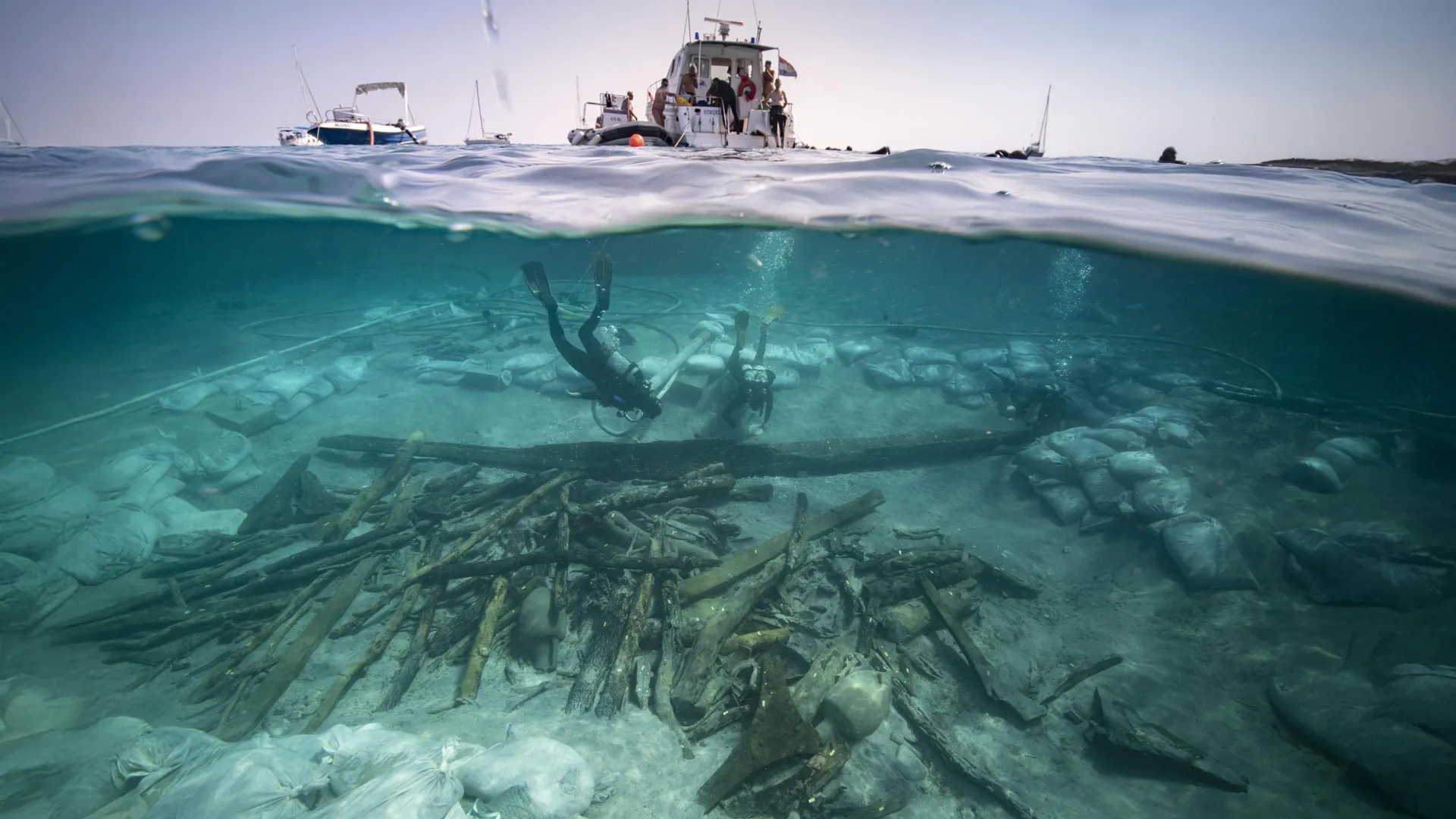
Researchers investigating a 2,200-year-old Roman shipwreck off the coast of Croatia have discovered sophisticated waterproofing recipes combining pine tar and beeswax, alongside preserved pollen that tracks the vessel's history.
 🔬Science
Photo: ScienceDaily
Key points
- Researchers analyzed a 2,200-year-old Roman shipwreck near Croatia
- Two waterproofing methods found: pine tar and a pine tar-beeswax mixture
- Mass spectrometry and pollen analysis revealed construction environments
Maritime expeditions in antiquity faced persistent threats from saltwater, microorganisms, and wood-boring marine mollusks capable of causing extensive structural damage. While archaeological studies of ancient vessels historically focused on wooden components, protective organic coatings remained a largely understudied aspect of maritime technology. Recent scientific efforts are now filling this knowledge gap.
Unlocking the Secrets of Ilovik-Paržine 1
An international team of researchers from France and Croatia analyzed protective coatings from the Ilovik-Paržine 1, a Roman Republic-era ship that sank approximately 2,200 years ago off the coast of modern Croatia. Utilizing mass spectrometry, the team performed molecular analysis on ten samples of the ship's protective layer, revealing two distinct waterproofing recipes.
The primary material used was pine tar, or pitch, derived from heated conifer resin to seal gaps between wooden components. Notably, one sample contained a mixture of pine tar and beeswax—a substance known to ancient Greek shipbuilders as zopissa. This additive increased the flexibility of the coating, allowing it to withstand the structural shifting caused by waves and changing environmental conditions.
Pollen Preservation and Historical Context
The sticky nature of pitch inadvertently served another function by trapping microscopic pollen grains from surrounding vegetation. By analyzing this preserved pollen, scientists gained insights into the specific regional environments where the ship was constructed or repaired, offering a broader view of ancient trade and manufacturing traditions.
Source ScienceDaily — sciencedaily.com/releases/2026/11/261123232342.htm ↗
Read next
 🚀Space
Ukraine braces for another difficult winter amid ongoing attacks on energy infrastructure
Ukrainians are preparing for a harsh winter as continuous strikes on energy facilities and rising food prices strain households.
 🛡️Cyber
Russia’s hybrid war on Europe is evolving but failing to deter Ukraine support, IISS report says
A report by the IISS highlights an increase in Russian sabotage and infrastructure attacks across Europe, noting however that the strategy has failed to weaken support fo…
 💻Tech
Astronomers Witness Rare Stellar Merger as Red Giant Devours Companion Star
An international team of researchers used advanced ground- and space-based telescopes to document a rare cosmic event where a massive red giant swallowed its smaller stel…
 🛡️Cyber
Cybersecurity Weekly Roundup: Ransomware Fraud, ChatGPT Sites Leaks, and New Defenses
The latest threat intelligence roundup covers charges against a recovery firm co-founder, web app exposure risks, software patches, and VirusTotal's new detection feature…
 🌍World
NATO Fighter Jets Scrambled After Drone Enters Latvian Airspace
Latvian armed forces deployed Alliance aircraft and interceptors following a brief border breach by an unidentified unmanned aerial vehicle.
 🤖AI
Global Canopy Atlas Maps World Forests Using 3D Laser Surveys
An international team of researchers has compiled thousands of aerial LiDAR scans into a unified digital platform to analyze global woody ecosystems.