Edible Seaweed Packaging: Can It Help Solve the Global Plastic Crisis?
Start-up Notpla and Innocent Drinks have tested edible seaweed pods for beverages as an eco-friendly alternative to traditional plastic bottles.
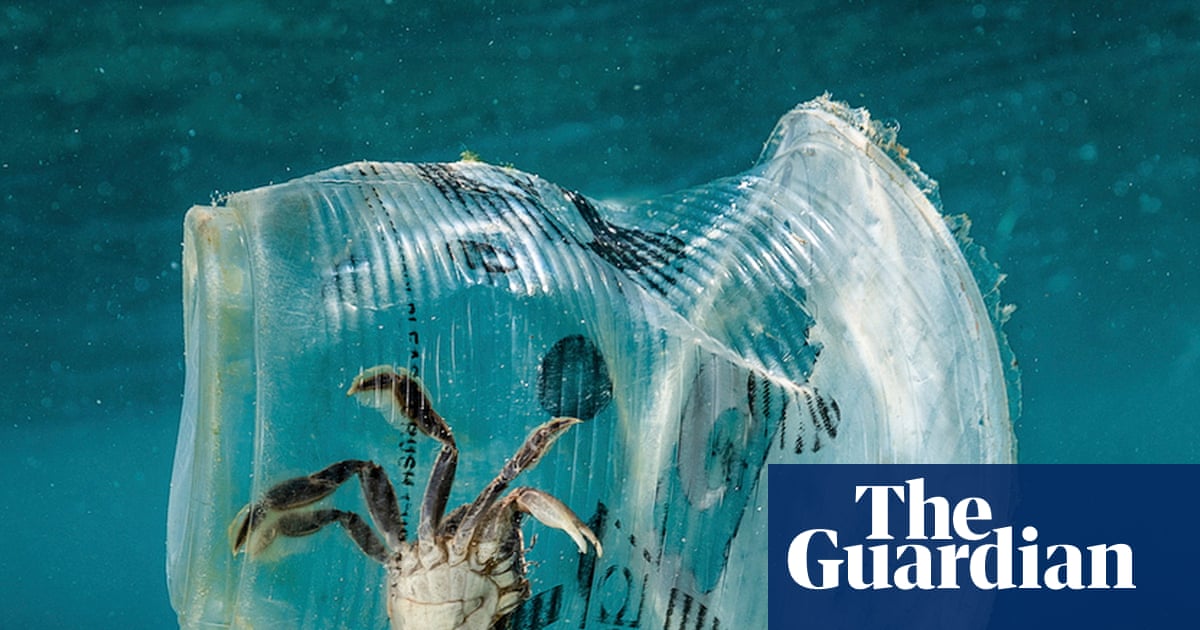 🔬Science
Photo: The Guardian — Business
Key points
- Notpla and Innocent Drinks trialed edible seaweed beverage pods in a UK pilot project.
- Global plastic and packaging waste continues to expand despite low recycling efficiency.
- Seaweed offers rapid growth rates, but scaling production remains hindered by cost, logistics, and material sensitivity.
The escalating crisis of global plastic waste is driving innovators to explore radical alternatives to conventional packaging. In the small English hamlet of Nobottle, packaging start-up Notpla partnered with beverage maker Innocent Drinks to trial edible pods made from seaweed. Local residents were offered ginger shots encased in a biodegradable membrane that dissolves or can be consumed entirely after drinking.
Scaling Challenges and Environmental Potential
Global packaging waste is projected to reach massive proportions, driven largely by plastic, which saw its waste volumes double between 2000 and 2019. With packaging accounting for roughly 40% of this total and global recycling rates remaining relatively low, researchers are looking to natural materials. Seaweed has emerged as a promising solution because it grows at exceptional rates—up to 60 centimeters a day—without competing with land crops for space or resources.
Despite environmental benefits, widespread adoption faces significant hurdles. Industry experts note that edible packaging is sensitive to fluctuating environmental conditions, requiring specialized handling during transit and storage. Furthermore, manufacturing costs remain a primary concern; traditional non-biodegradable plastics dominate a massive multi-billion-dollar market, dwarfing the emerging edible sector. Scaling up seaweed harvesting to match the billions of tonnes of plastic consumed annually would also require unprecedented industrial transformation.
Source The Guardian — Business — theguardian.com/environment/2026/nov/20/could-edible-packaging-help… ↗
Read next
 🚀Space
Ukraine braces for another difficult winter amid ongoing attacks on energy infrastructure
Ukrainians are preparing for a harsh winter as continuous strikes on energy facilities and rising food prices strain households.
 🛡️Cyber
Russia’s hybrid war on Europe is evolving but failing to deter Ukraine support, IISS report says
A report by the IISS highlights an increase in Russian sabotage and infrastructure attacks across Europe, noting however that the strategy has failed to weaken support fo…
 🛡️Cyber
Cybersecurity Weekly Roundup: Ransomware Fraud, ChatGPT Sites Leaks, and New Defenses
The latest threat intelligence roundup covers charges against a recovery firm co-founder, web app exposure risks, software patches, and VirusTotal's new detection feature…
 💻Tech
Astronomers Witness Rare Stellar Merger as Red Giant Devours Companion Star
An international team of researchers used advanced ground- and space-based telescopes to document a rare cosmic event where a massive red giant swallowed its smaller stel…
 🌍World
NATO Fighter Jets Scrambled After Drone Enters Latvian Airspace
Latvian armed forces deployed Alliance aircraft and interceptors following a brief border breach by an unidentified unmanned aerial vehicle.
 🤖AI
Global Canopy Atlas Maps World Forests Using 3D Laser Surveys
An international team of researchers has compiled thousands of aerial LiDAR scans into a unified digital platform to analyze global woody ecosystems.