Watching Aggression Builds Defense Skills: New Mouse Study Reveals
Researchers found that observing conflicts allows male mice to adapt and better defend themselves against stronger opponents.
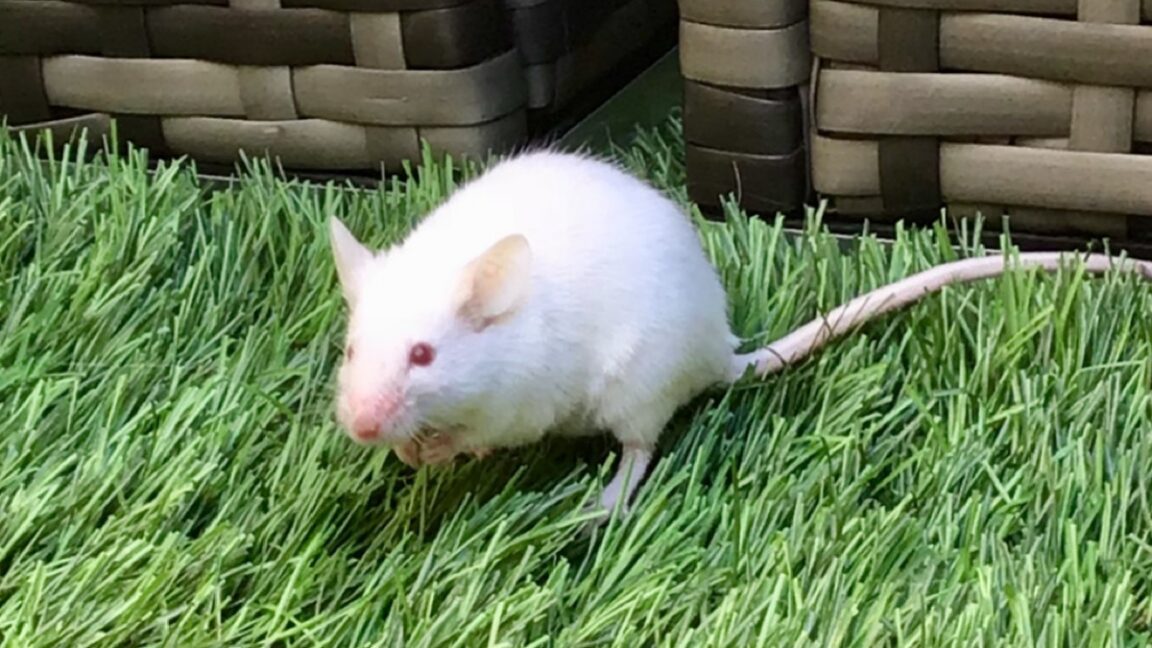 🔬Science
Photo: Ars Technica
Key points
- Spectator mice defended themselves better against stronger opponents
- Neural activity in spectators closely mirrored that of actual fighters
- Study confirmed adaptive social learning mechanisms in mammalian brains
The question of how observing violent events affects living organisms has long been debated in the scientific community. A new study published in the journal Nature demonstrates that such behavior may serve an evolutionarily useful survival mechanism. Princeton University researchers discovered that male mice who observed fights between other rodents picked up self-defense skills and exhibited better resilience in subsequent encounters with aggressive opponents.
Experimental Design and Neurobiological Changes
To test this hypothesis, the researchers randomly assigned the rodents to three categories: fighters, spectators, or novices. Over eight days, the groups underwent specialized sessions. "Mice are naturally territorial," co-author Jorge Iravedra-Garcia explained, describing the use of the resident-intruder assay to provoke fights in controlled conditions. Spectator mice watched the confrontations from a raised platform behind a transparent barrier, allowing them to see, hear, and smell the rivals.
On the ninth day, all mice faced formidable opponents in a series of recorded rounds. Additionally, the scientists engineered the animals' excitatory and inhibitory brain cells to glow in different colors and implanted tiny optical fibers into 12 interconnected brain regions. This setup enabled real-time tracking of neural activity shifts across every region simultaneously.
Observation Results and Future Research
The analysis revealed that spectator mice prepared significantly better for their own fights compared to novices. They spent less time turning their backs on opponents and were quicker to launch counterattacks. Neural data mirrored these behavioral shifts: during the decisive clashes, the brain activity patterns of spectator mice closely resembled those of experienced fighters. According to Annegret Falkner, the process of observing attacks triggers specific plasticity mechanisms that shape adaptive behavior.
Source Ars Technica — arstechnica.com/science/2026/11/watching-mouse-fight-club-teaches-the-c… ↗
Read next
 📈Business
Trump Administration Pressures Intel and Nvidia, Sparking Concerns Over State Control
Newly unsealed court documents reveal aggressive government pressure on Intel and Nvidia, shifting tech policy toward direct state stakes.
 🚀Space
Ukraine braces for another difficult winter amid ongoing attacks on energy infrastructure
Ukrainians are preparing for a harsh winter as continuous strikes on energy facilities and rising food prices strain households.
 🛡️Cyber
Russia’s hybrid war on Europe is evolving but failing to deter Ukraine support, IISS report says
A report by the IISS highlights an increase in Russian sabotage and infrastructure attacks across Europe, noting however that the strategy has failed to weaken support fo…
 🛡️Cyber
Cybersecurity Weekly Roundup: Ransomware Fraud, ChatGPT Sites Leaks, and New Defenses
The latest threat intelligence roundup covers charges against a recovery firm co-founder, web app exposure risks, software patches, and VirusTotal's new detection feature…
 💻Tech
Astronomers Witness Rare Stellar Merger as Red Giant Devours Companion Star
An international team of researchers used advanced ground- and space-based telescopes to document a rare cosmic event where a massive red giant swallowed its smaller stel…
 🌍World
NATO Fighter Jets Scrambled After Drone Enters Latvian Airspace
Latvian armed forces deployed Alliance aircraft and interceptors following a brief border breach by an unidentified unmanned aerial vehicle.