Why the 'Blaze Star' Explosion Is Delayed: Astronomers Explain
Scientists explain why the anticipated nova explosion of T Coronae Borealis is taking longer than expected and what to look out for.
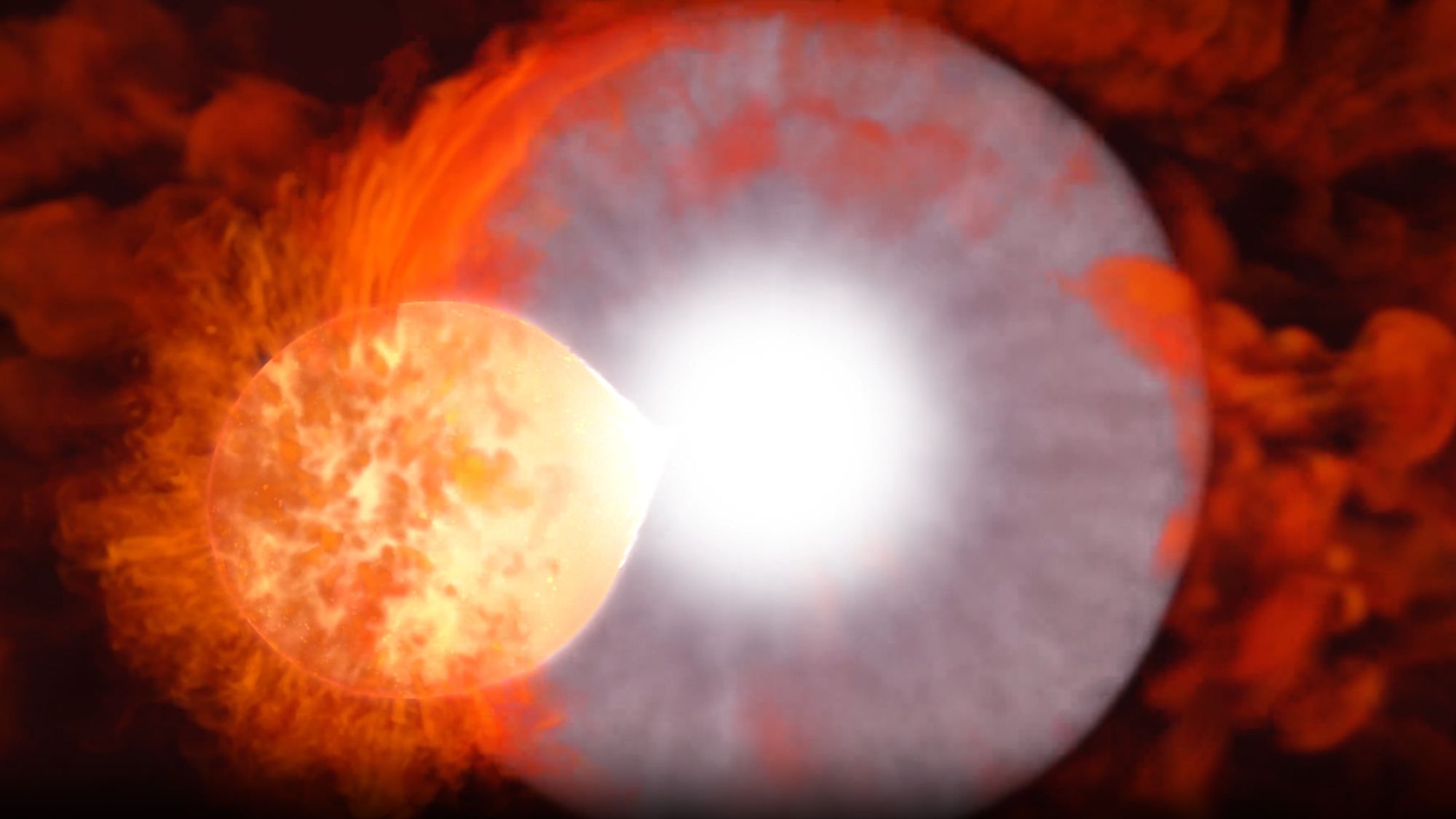 🔬Science
Photo: Space.com
Key points
- T Coronae Borealis is a binary system of a white dwarf and a red giant.
- The previous nova eruption occurred in 1946.
- Scientists compare nova prediction to weather forecasting.
- The star system will increase in brightness by 1,000 times.
Astronomers and stargazers worldwide have been closely monitoring the binary star system T Coronae Borealis, commonly known as the "Blaze Star." Comprising a dense white dwarf and a bloated red giant, the system triggers a cataclysmic nova explosion roughly every 80 years. With the last major outburst occurring in 1946, researchers have entered the expected window for a repeat performance.
However, pinning down the exact timing has proven difficult. According to Bradley Schaefer of Louisiana State University, measuring the precise rate of gas accumulation and the exact trigger mass required for the thermonuclear runaway remains a challenge. Experts know the material is piling up near the threshold, but the exact tipping point is elusive.
Elizabeth Hays of NASA's Goddard Spaceflight Center compares predicting nova outbursts to forecasting the weather. While the atmospheric conditions may be right, the precise timing of the storm remains uncertain. Nonetheless, Hays notes she would be surprised if the event delays past 2030.
When the eruption finally occurs, the system's brightness will surge about a thousandfold within a single day. Thanks to rigorous monitoring programs by amateur and professional astronomers across the globe, alerts are expected to circulate within minutes of the initial brightening, allowing observatories to capture the rare event.
Source Space.com — space.com/stargazing/why-hasnt-the-blaze-star-exploded-yet-astronom… ↗
Read next
 🚀Space
Ukraine braces for another difficult winter amid ongoing attacks on energy infrastructure
Ukrainians are preparing for a harsh winter as continuous strikes on energy facilities and rising food prices strain households.
 🛡️Cyber
Russia’s hybrid war on Europe is evolving but failing to deter Ukraine support, IISS report says
A report by the IISS highlights an increase in Russian sabotage and infrastructure attacks across Europe, noting however that the strategy has failed to weaken support fo…
 🛡️Cyber
Cybersecurity Weekly Roundup: Ransomware Fraud, ChatGPT Sites Leaks, and New Defenses
The latest threat intelligence roundup covers charges against a recovery firm co-founder, web app exposure risks, software patches, and VirusTotal's new detection feature…
 💻Tech
Astronomers Witness Rare Stellar Merger as Red Giant Devours Companion Star
An international team of researchers used advanced ground- and space-based telescopes to document a rare cosmic event where a massive red giant swallowed its smaller stel…
 🌍World
NATO Fighter Jets Scrambled After Drone Enters Latvian Airspace
Latvian armed forces deployed Alliance aircraft and interceptors following a brief border breach by an unidentified unmanned aerial vehicle.
 🤖AI
Global Canopy Atlas Maps World Forests Using 3D Laser Surveys
An international team of researchers has compiled thousands of aerial LiDAR scans into a unified digital platform to analyze global woody ecosystems.