Heavy Rains Rapidly Fill New Mexico’s Second-Largest Reservoir
Back-to-back extreme rainstorms across the U.S. Southwest in late autumn 2026 eased short-term drought conditions while triggering severe river flooding.
 🔬Science
Photo: NASA News
Key points
- Navajo Reservoir water levels rose by nearly 60 feet in weeks
- Reservoir capacity reached 108 percent of the historical average by November
- Severe river flooding forced evacuations in Colorado
- Heavy rainfall effectively ended short-term drought in the Southwest
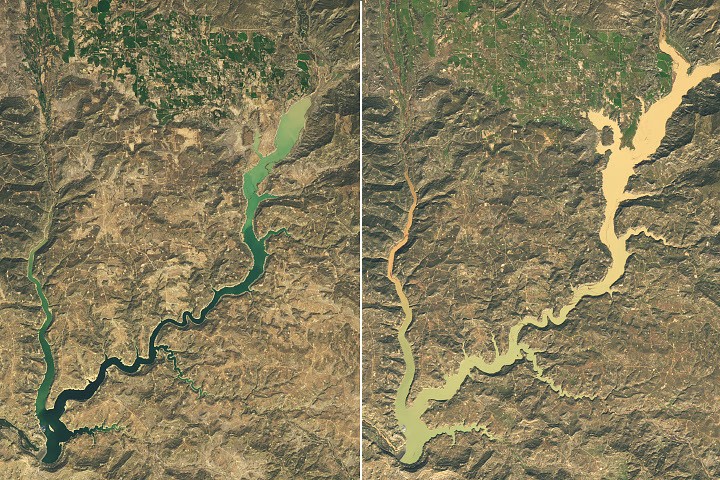
A succession of severe rainstorms hitting the Four Corners region of the U.S. Southwest in late October and early November 2026 has dramatically boosted water levels at Navajo Reservoir in New Mexico. Observations from the Landsat 9 satellite reveal that the lake rose by nearly 60 feet, reaching its highest point since August 2019.
According to data provided by the U.S. Army Corps of Engineers, the reservoir stood at 108 percent of its average capacity by November 7. This marked a sharp turnaround from September 20, when water levels sat at just 60 percent of normal due to a lack of snowmelt earlier in the year. Precipitation totals across parts of Colorado, Utah, Arizona, and New Mexico soared to two to four times above average during the two-month period.
The intense downpours swelled local waterways such as the San Juan and Piedra rivers. Pagosa Springs in Colorado experienced major flooding, with river levels nearing the historic record set during a devastating flood in 1911. Emergency services issued evacuation orders and rescued numerous residents as streets and properties were submerged.
While the floods presented considerable hazards, the storms successfully alleviated short-term drought conditions across the Southwest and Great Basin. Meteorologists attribute the moisture-heavy low-pressure systems to enhanced El Niño patterns drawing energy from unusually warm ocean temperatures.
Source NASA News — science.nasa.gov/earth/earth-observatory/water-surges-into-navajo-reser… ↗
Read next
 📈Business
EU Budget Row: Macron Accuses Le Pen of Arrogance Amid Multiannual Funding Clash
Discussions over the European Union's next multiannual budget have sparked a fierce political showdown between French President Emmanuel Macron and far-right leader Marin…
 📈Business
Trump Administration Pressures Intel and Nvidia, Sparking Concerns Over State Control
Newly unsealed court documents reveal aggressive government pressure on Intel and Nvidia, shifting tech policy toward direct state stakes.
 🚀Space
Ukraine braces for another difficult winter amid ongoing attacks on energy infrastructure
Ukrainians are preparing for a harsh winter as continuous strikes on energy facilities and rising food prices strain households.
 🛡️Cyber
Russia’s hybrid war on Europe is evolving but failing to deter Ukraine support, IISS report says
A report by the IISS highlights an increase in Russian sabotage and infrastructure attacks across Europe, noting however that the strategy has failed to weaken support fo…
 🛡️Cyber
Cybersecurity Weekly Roundup: Ransomware Fraud, ChatGPT Sites Leaks, and New Defenses
The latest threat intelligence roundup covers charges against a recovery firm co-founder, web app exposure risks, software patches, and VirusTotal's new detection feature…
 💻Tech
Astronomers Witness Rare Stellar Merger as Red Giant Devours Companion Star
An international team of researchers used advanced ground- and space-based telescopes to document a rare cosmic event where a massive red giant swallowed its smaller stel…