The Protein Boom: How Marketing Outpaces Nutritional Science
Analysis reveals that protein consumption in developed nations already exceeds recommended levels, despite aggressive marketing of protein-enriched products.
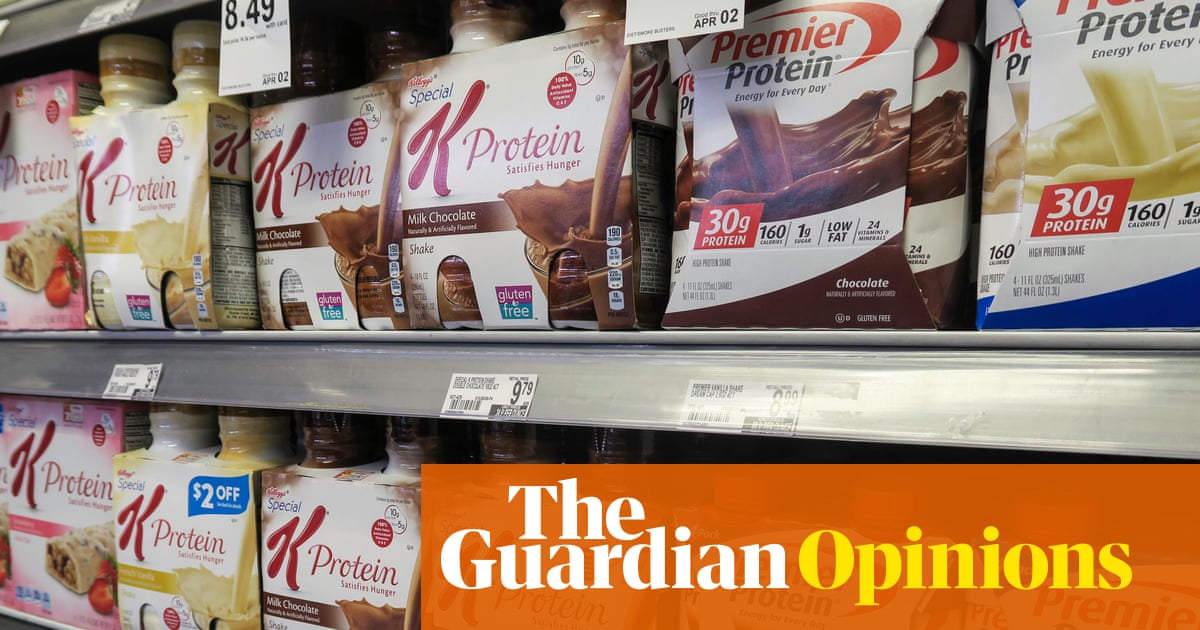 📈Business
Photo: The Guardian — Business
Key points
- Average protein intake already exceeds recommended levels
- Protein marketing often ignores product ingredient quality
- Ultra-processed foods pose hidden health risks
- Excessive protein may be detrimental to sedentary individuals
The Evolution of Nutritional Trends
Over the past few decades, the food industry has shifted its marketing focus, often demonizing specific nutrients to drive sales. Following campaigns against fats and carbohydrates, protein has emerged as the latest nutritional focus. Social media influencers and food manufacturers are actively promoting the narrative that additional protein is essential for optimal health and physical appearance.
However, data from the British Nutrition Foundation suggests a different reality: average protein intake in the UK already significantly exceeds official recommendations. Men consume an average of 85g per day, while women consume 67g, both well above the standard requirement of 0.75g per kilogram of body weight. Most individuals obtain sufficient protein from whole foods such as dairy, grains, legumes, and meat.
The Risks of Ultra-Processed Foods
The mass production of goods labeled "protein-enriched" has led to an influx of ultra-processed items. These products frequently contain high levels of salt, sugar, preservatives, and artificial additives. Adding protein does not mitigate the health risks associated with high levels of processing, casting doubt on marketing claims regarding the health benefits of such snacks.
A review published in August 2026 highlights that excessive protein consumption in sedentary individuals may negatively impact metabolic health. As Professor Dudley Lamming stated: "Because most people are relatively sedentary, many people are likely consuming more protein than they actually need, which probably has negative health consequences."
Source The Guardian — Business — theguardian.com/commentisfree/2026/nov/26/eating-too-much-protein-i… ↗
Read next
 🚀Space
Ukraine braces for another difficult winter amid ongoing attacks on energy infrastructure
Ukrainians are preparing for a harsh winter as continuous strikes on energy facilities and rising food prices strain households.
 🛡️Cyber
Russia’s hybrid war on Europe is evolving but failing to deter Ukraine support, IISS report says
A report by the IISS highlights an increase in Russian sabotage and infrastructure attacks across Europe, noting however that the strategy has failed to weaken support fo…
 🔬Science
Biomolecular analysis reveals centuries-old embalming recipes for Egyptian crocodile mummies
A study of ancient Egyptian crocodile mummies shows that embalmers used the exact same beeswax and pine resin recipe centuries apart at a single site.
 💻Tech
Astronomers Witness Rare Stellar Merger as Red Giant Devours Companion Star
An international team of researchers used advanced ground- and space-based telescopes to document a rare cosmic event where a massive red giant swallowed its smaller stel…
 🛡️Cyber
Cybersecurity Weekly Roundup: Ransomware Fraud, ChatGPT Sites Leaks, and New Defenses
The latest threat intelligence roundup covers charges against a recovery firm co-founder, web app exposure risks, software patches, and VirusTotal's new detection feature…
 🌍World
NATO Fighter Jets Scrambled After Drone Enters Latvian Airspace
Latvian armed forces deployed Alliance aircraft and interceptors following a brief border breach by an unidentified unmanned aerial vehicle.