German Auto Sector Under Pressure as Costs and Global Competition Bite
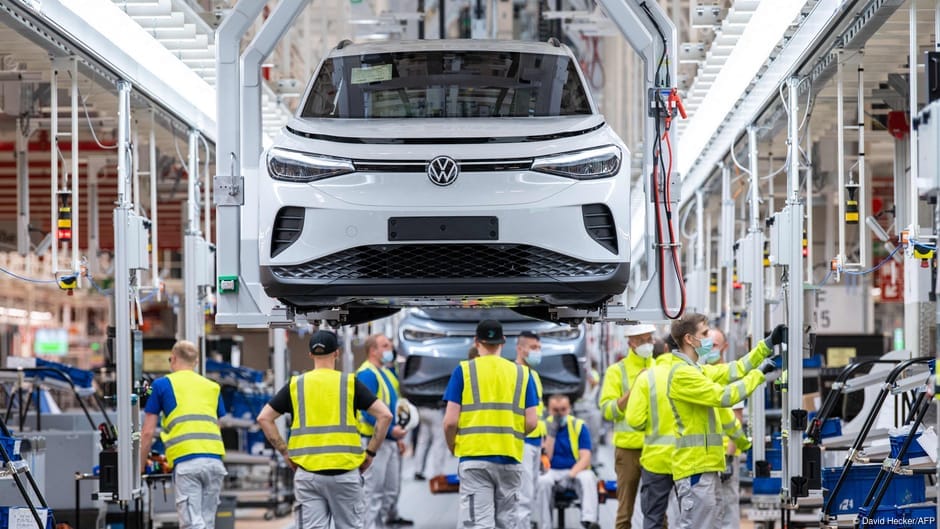
Germany's historic labor-management consensus is fracturing as carmakers push for wage freezes and cost cuts amid intense global competition.
 📈Business
Photo: DW (EN)
Key points
- Volkswagen demands a two-year wage freeze and benefit cuts
- German automotive industry lost over 123,000 jobs between 2019 and 2025
- Shift to electric vehicles and Chinese competition weaken labor leverage
The Breakdown of Historic Compromises
For decades, German auto executives and labor representatives prided themselves on a uniquely cooperative framework. Today, that power-sharing agreement faces unprecedented strain as the industry navigates profound structural crises and aggressive corporate cost-cutting measures.
As negotiations commenced between labor unions and Germany's largest automaker, Volkswagen, the balance of power shifted decisively toward management. Volkswagen is seeking a two-year wage freeze alongside the elimination of several bonuses and allowances. Simultaneously, major players like Mercedes are demanding longer working hours for flat compensation, warning that they may withhold future investments from domestic German facilities.
Market Pressures and Labor Pushback
In response, unions have staged warning strikes while signaling the potential for broader walkouts. Workers remain acutely aware of the deteriorating employment landscape, with the Ifo Institute reporting that Germany's automotive sector shed over 123,000 jobs between 2019 and 2025.
«I think that the labor representatives are in a very difficult situation», noted Thomas Haipeter, a labor researcher at the University of Duisburg-Essen.
Sluggish electric vehicle sales and mounting pressure from Chinese manufacturers have exposed widening cost gaps. While combustion engine dominance once allowed labor to justify premium German manufacturing costs through technological superiority, the shift to electric vehicles has upended that paradigm. Management is increasingly prioritizing lower-cost international production hubs over domestic plants with high wage structures.
Source DW (EN) — dw.com/en/german-auto-workers-on-back-foot-as-costs-competition-bit… ↗
Read next
 🚀Space
Ukraine braces for another difficult winter amid ongoing attacks on energy infrastructure
Ukrainians are preparing for a harsh winter as continuous strikes on energy facilities and rising food prices strain households.
 🛡️Cyber
Russia’s hybrid war on Europe is evolving but failing to deter Ukraine support, IISS report says
A report by the IISS highlights an increase in Russian sabotage and infrastructure attacks across Europe, noting however that the strategy has failed to weaken support fo…
 🔬Science
Biomolecular analysis reveals centuries-old embalming recipes for Egyptian crocodile mummies
A study of ancient Egyptian crocodile mummies shows that embalmers used the exact same beeswax and pine resin recipe centuries apart at a single site.
 💻Tech
Astronomers Witness Rare Stellar Merger as Red Giant Devours Companion Star
An international team of researchers used advanced ground- and space-based telescopes to document a rare cosmic event where a massive red giant swallowed its smaller stel…
 🛡️Cyber
Cybersecurity Weekly Roundup: Ransomware Fraud, ChatGPT Sites Leaks, and New Defenses
The latest threat intelligence roundup covers charges against a recovery firm co-founder, web app exposure risks, software patches, and VirusTotal's new detection feature…
 🌍World
NATO Fighter Jets Scrambled After Drone Enters Latvian Airspace
Latvian armed forces deployed Alliance aircraft and interceptors following a brief border breach by an unidentified unmanned aerial vehicle.