Copenhagen Airport plans major expansion to accommodate 55 million passengers a year
Denmark's primary aviation hub has unveiled an ambitious infrastructure upgrade to boost its annual passenger capacity by nearly 60 percent.
 📈Business
Photo: Euronews
Key points
- Copenhagen Airport aims to expand capacity to 55 million passengers annually
- Initiative is backed by IATA projections forecasting doubled air travel demand by 2050
- Aviation industry contribution to Danish GDP projected to reach up to 90 billion Kroner by 2030
Copenhagen Airport is preparing for a significant infrastructure overhaul designed to increase its annual capacity to 55 million travelers. This expansion represents a roughly 60 percent jump from its current operational volume, aligning with long-term forecasts of rising global mobility and international travel demand.
The Danish Agency for Planning and Rural Development is overseeing the regulatory process for the terminals and passenger facilities. The airport's operator, Copenhagen Airports A/S, bases the initiative on projections from the International Air Transport Association (IATA), which anticipates global air travel demand to double by 2050. The hub already expects to handle approximately 34.5 million passengers by the end of 2026.
Economic impact and green initiatives
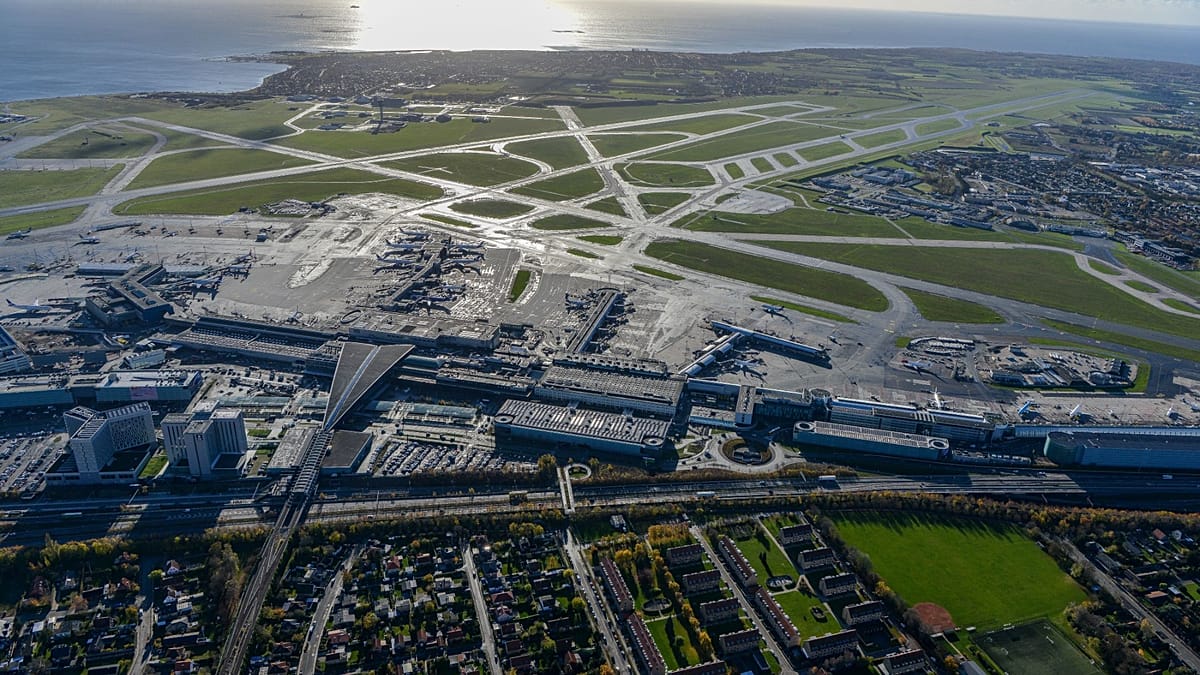
The modernization blueprint includes substantial changes to the airfield layout. Planners intend to establish dedicated parking stands for newer, larger long-haul aircraft in the northwest zone, alongside relocating and shortening the transverse runway to clear space for further development.
Christian Poulsen, CEO of Copenhagen Airport, emphasized the critical connection between global accessibility and the open economy. According to operator estimates, the aviation sector and the airport ecosystem could generate 35,000 new jobs by 2030, boosting their combined contribution to Denmark's GDP to between 60 billion and 90 billion Danish Kroner.
Recognizing the environmental challenges of growth, the airport operator is integrating noise reduction and emissions-mitigation measures into the master plan. These include taller noise barriers, noise-absorbing building cladding, and optimizing ground routes to shorten taxi times while engines are running. The operator notes that newer aircraft generations generally feature a lower carbon footprint and generate less noise despite their larger physical dimensions.
Source Euronews — euronews.com/2026/11/24/copenhagen-airport-plans-major-expansion-to… ↗
Read next
 🚀Space
Ukraine braces for another difficult winter amid ongoing attacks on energy infrastructure
Ukrainians are preparing for a harsh winter as continuous strikes on energy facilities and rising food prices strain households.
 🛡️Cyber
Russia’s hybrid war on Europe is evolving but failing to deter Ukraine support, IISS report says
A report by the IISS highlights an increase in Russian sabotage and infrastructure attacks across Europe, noting however that the strategy has failed to weaken support fo…
 🔬Science
Biomolecular analysis reveals centuries-old embalming recipes for Egyptian crocodile mummies
A study of ancient Egyptian crocodile mummies shows that embalmers used the exact same beeswax and pine resin recipe centuries apart at a single site.
 💻Tech
Astronomers Witness Rare Stellar Merger as Red Giant Devours Companion Star
An international team of researchers used advanced ground- and space-based telescopes to document a rare cosmic event where a massive red giant swallowed its smaller stel…
 🛡️Cyber
Cybersecurity Weekly Roundup: Ransomware Fraud, ChatGPT Sites Leaks, and New Defenses
The latest threat intelligence roundup covers charges against a recovery firm co-founder, web app exposure risks, software patches, and VirusTotal's new detection feature…
 🌍World
NATO Fighter Jets Scrambled After Drone Enters Latvian Airspace
Latvian armed forces deployed Alliance aircraft and interceptors following a brief border breach by an unidentified unmanned aerial vehicle.