Iran Claims Destruction of US Radar in Bahrain as Clerics Call for Nuclear Doctrine Review
The Islamic Revolutionary Guard Corps launched a retaliatory strike on a US radar facility in Bahrain. Simultaneously, Iran's Assembly of Experts urged a reconsideration of the country's adherence to the Nuclear Non-Proliferation Treaty.
 📈Business
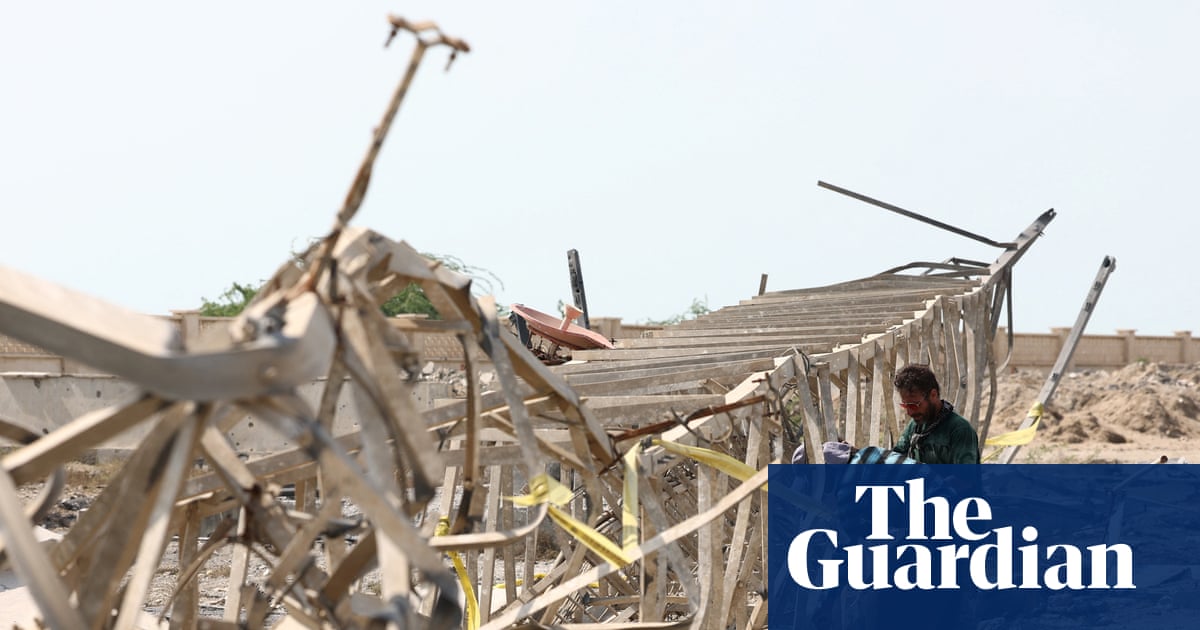
Photo: The Guardian — World
Key points
- IRGC destroyed a US early-warning radar in Bahrain following a US strike in Sirik.
- Iran's Assembly of Experts called for reviewing the nation's defense doctrine and NPT membership.
- UN nuclear monitors reported heightened concern over denied access to the Isfahan facility.
Tensions in the Middle East have escalated following Iran's first direct strike on US military assets in months. The Islamic Revolutionary Guard Corps (IRGC) announced it had targeted and destroyed a US early-warning radar system in Bahrain. According to the IRGC, the operation was conducted in retaliation for an earlier US airstrike on a communications tower in Sirik, located near the Strait of Hormuz.
US Strategic Position and British Public Sentiment
Donald Trump stated in interviews that he would only order military action against Iran if deemed absolutely necessary, noting that Gulf allies like Saudi Arabia have counseled restraint. Additionally, Trump instructed Vice President JD Vance to discontinue efforts aimed at negotiating a new agreement with Tehran.
Meanwhile, a YouGov poll conducted for Caabu revealed that 65% of the British public opposes the US resuming military conflict with Iran, with 54% objecting to the use of UK military bases by US forces for strikes against Iranian targets.
Escalation and Nuclear Non-Proliferation Concerns
Compounding the military tension, Iran's Assembly of Experts has formally advocated for a review of the nation's defense policy and its participation in the Nuclear Non-Proliferation Treaty (NPT). Such a shift could potentially dismantle longstanding religious prohibitions against nuclear weapons acquisition. In parallel, the International Atomic Energy Agency (IAEA) raised alarm over restricted access to the Isfahan nuclear site and the inability to verify ongoing enrichment activities.
Source The Guardian — World — theguardian.com/world/2026/nov/13/iran-us-radar-bahrain-sirik-hormuz ↗
Read next
 🚀Space
Ukraine braces for another difficult winter amid ongoing attacks on energy infrastructure
Ukrainians are preparing for a harsh winter as continuous strikes on energy facilities and rising food prices strain households.
 🛡️Cyber
Russia’s hybrid war on Europe is evolving but failing to deter Ukraine support, IISS report says
A report by the IISS highlights an increase in Russian sabotage and infrastructure attacks across Europe, noting however that the strategy has failed to weaken support fo…
 🔬Science
Biomolecular analysis reveals centuries-old embalming recipes for Egyptian crocodile mummies
A study of ancient Egyptian crocodile mummies shows that embalmers used the exact same beeswax and pine resin recipe centuries apart at a single site.
 🛡️Cyber
Cybersecurity Weekly Roundup: Ransomware Fraud, ChatGPT Sites Leaks, and New Defenses
The latest threat intelligence roundup covers charges against a recovery firm co-founder, web app exposure risks, software patches, and VirusTotal's new detection feature…
 💻Tech
Astronomers Witness Rare Stellar Merger as Red Giant Devours Companion Star
An international team of researchers used advanced ground- and space-based telescopes to document a rare cosmic event where a massive red giant swallowed its smaller stel…
 🌍World
NATO Fighter Jets Scrambled After Drone Enters Latvian Airspace
Latvian armed forces deployed Alliance aircraft and interceptors following a brief border breach by an unidentified unmanned aerial vehicle.