Cloudy Weather and 'Dunkelflaute' Challenge Europe's Solar Power Boom
Europe is facing challenges due to a prolonged period of cloudy and windless weather, termed 'dunkelflaute,' which significantly reduces solar energy production and leads to rising electricity prices.
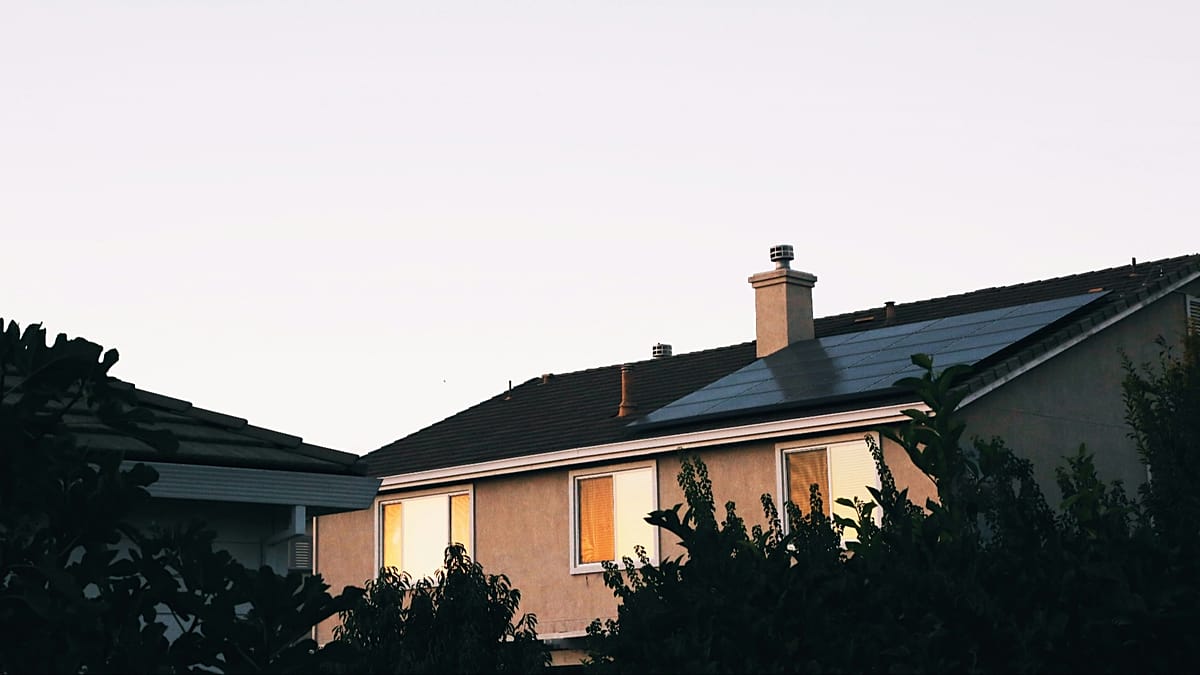 📈Business
Photo: Euronews
Key points
- Europe faces 'dunkelflaute', reducing solar energy production.
- Solar power saved EU billions but is weather-dependent.
- Electricity prices are rising, households see increased bills.
- Solar panels still produce energy in winter, but less.
- The phenomenon underscores the need for energy diversification and storage.
Europe Faces Energy Challenges Amidst 'Dunkelflaute'
The European continent is experiencing a period of 'dunkelflaute' – a German term describing extended periods of low or non-existent wind and solar power generation due to insufficient wind or sunlight. This phenomenon, typical for Northern Europe from October through February, is exacerbated by short daylight hours, heavy cloud cover, and fog, coinciding with increased demand for heating.
Solar power, hailed as a shining star in the transition away from fossil fuels, is one of the quickest-to-install and cheapest forms of energy. Under optimal conditions, it can cost as little as €0.024 to produce one unit of power, significantly outperforming coal, gas, and even wind. Since the war on Iran broke out on February 28, solar energy has already saved the EU €42.9 billion in avoided gas imports and helped stabilize the grid during summer heatwaves.
However, current weather conditions pose serious problems. According to Bloomberg forecasts, German day-ahead power prices for October 29 exceeded €300 per megawatt-hour, roughly double the October average, with hourly rates hitting above €500 for the evening peak.
Individual households with solar panels are also noticing a spike in their energy bills. One UK resident reported that their 12 panels produced only 10.90 kWh on November 4, while on November 5, a completely overcast day, generation was just 2.40 kWh. This forces consumers to rely on more expensive grid energy, despite having home storage batteries.
While solar power generates most of its electricity in the summer (25.4% in June in the EU versus 13.2% in October), it still plays a vital role in winter, providing 25-35% of annual output. Furthermore, solar generation effectively offsets consumption spikes during heatwaves, when other sources like coal, hydropower, and nuclear may struggle due to water scarcity for cooling.
Source Euronews — euronews.com/2026/11/08/were-hardly-producing-any-power-can-europes… ↗
Read next
 🚀Space
Ukraine braces for another difficult winter amid ongoing attacks on energy infrastructure
Ukrainians are preparing for a harsh winter as continuous strikes on energy facilities and rising food prices strain households.
 🛡️Cyber
Russia’s hybrid war on Europe is evolving but failing to deter Ukraine support, IISS report says
A report by the IISS highlights an increase in Russian sabotage and infrastructure attacks across Europe, noting however that the strategy has failed to weaken support fo…
 🔬Science
Biomolecular analysis reveals centuries-old embalming recipes for Egyptian crocodile mummies
A study of ancient Egyptian crocodile mummies shows that embalmers used the exact same beeswax and pine resin recipe centuries apart at a single site.
 🛡️Cyber
Cybersecurity Weekly Roundup: Ransomware Fraud, ChatGPT Sites Leaks, and New Defenses
The latest threat intelligence roundup covers charges against a recovery firm co-founder, web app exposure risks, software patches, and VirusTotal's new detection feature…
 💻Tech
Astronomers Witness Rare Stellar Merger as Red Giant Devours Companion Star
An international team of researchers used advanced ground- and space-based telescopes to document a rare cosmic event where a massive red giant swallowed its smaller stel…
 🌍World
NATO Fighter Jets Scrambled After Drone Enters Latvian Airspace
Latvian armed forces deployed Alliance aircraft and interceptors following a brief border breach by an unidentified unmanned aerial vehicle.