Study Reveals Artificial Intelligence May Not Process Information Like the Human Brain
New research shows that while artificial intelligence can successfully predict brain activity, it relies on fundamentally different internal mechanisms than biological vision.
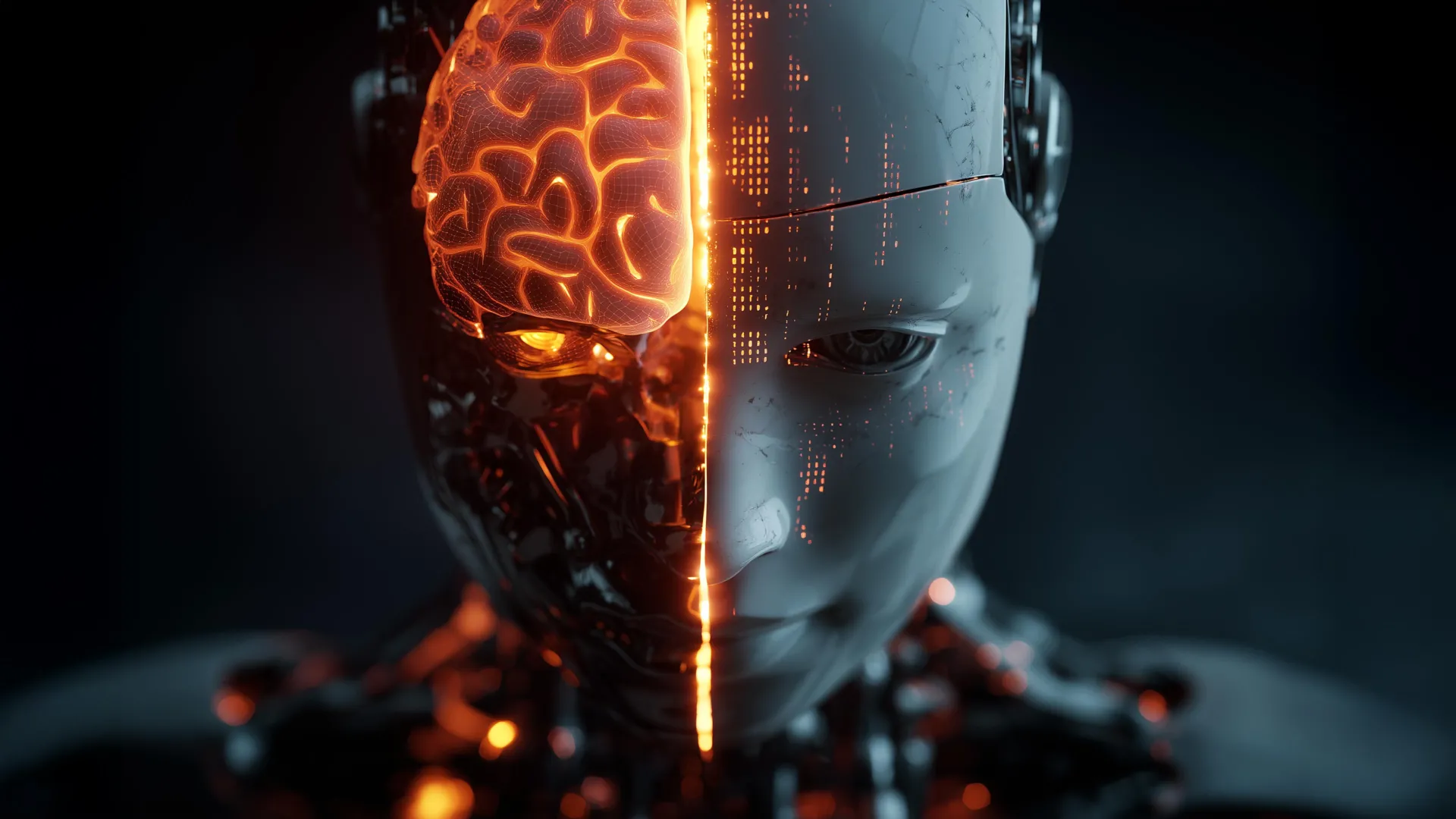 🤖AI
Photo: ScienceDaily
Key points
- AI models use fundamentally different internal mechanisms than the human brain
- Reverse predictivity testing revealed a major disconnect in computational processing
- AI predicts brain responses, but brain activity poorly predicts AI internal features
- Findings warn against assuming functional mimicry equals structural equivalence
Uncovering Hidden Flaws in Brain-Like AI Models
For over a decade, artificial neural networks have served as vital tools for neuroscientists striving to understand how the human brain processes visual information. Because these computer systems can replicate specific patterns of brain activity during object recognition, researchers frequently describe them as brain-like. However, a new study conducted by a team at York University has challenged the assumption that this functional mimicry runs both ways.
Traditionally, scientists tested artificial intelligence models in a single direction by measuring whether algorithms could successfully predict neuronal responses to various images. To investigate deeper, the research team approached the question from the opposite perspective using a reverse predictivity testing method. They evaluated responses to 1,320 natural and synthetic images depicting familiar subjects across diverse backgrounds, alongside 300 stylized representations, to determine whether recorded brain activity could accurately predict internal features within the AI models themselves.
A Significant Disconnect in Processing Mechanisms
The experimental results uncovered a substantial gap between biological vision and artificial intelligence algorithms. While the AI models proved effective at predicting recorded neuronal responses, the reverse process failed: actual brain activity was markedly less successful at predicting the internal features of the AI systems. Interestingly, the researchers noted that comparing neuronal activity between different biological brains did not yield this imbalance.
The findings indicate that an AI system can produce outcomes closely mirroring the brain while utilizing entirely different internal processes. According to senior study author Kohitij Kar, ignoring this distinction could become increasingly problematic as technology advances, potentially leading researchers to rely on flawed models that accumulate discrepancies over time compared to actual primate brains.
Source ScienceDaily — sciencedaily.com/releases/2026/11/261120075701.htm ↗
Read next
 📈Business
Trump Administration Pressures Intel and Nvidia, Sparking Concerns Over State Control
Newly unsealed court documents reveal aggressive government pressure on Intel and Nvidia, shifting tech policy toward direct state stakes.
 🚀Space
Ukraine braces for another difficult winter amid ongoing attacks on energy infrastructure
Ukrainians are preparing for a harsh winter as continuous strikes on energy facilities and rising food prices strain households.
 🛡️Cyber
Russia’s hybrid war on Europe is evolving but failing to deter Ukraine support, IISS report says
A report by the IISS highlights an increase in Russian sabotage and infrastructure attacks across Europe, noting however that the strategy has failed to weaken support fo…
 🔬Science
Biomolecular analysis reveals centuries-old embalming recipes for Egyptian crocodile mummies
A study of ancient Egyptian crocodile mummies shows that embalmers used the exact same beeswax and pine resin recipe centuries apart at a single site.
 🛡️Cyber
Cybersecurity Weekly Roundup: Ransomware Fraud, ChatGPT Sites Leaks, and New Defenses
The latest threat intelligence roundup covers charges against a recovery firm co-founder, web app exposure risks, software patches, and VirusTotal's new detection feature…
 💻Tech
Astronomers Witness Rare Stellar Merger as Red Giant Devours Companion Star
An international team of researchers used advanced ground- and space-based telescopes to document a rare cosmic event where a massive red giant swallowed its smaller stel…